Free dental treatment options include preventive care, basic treatments like fillings and extractions, and educational resources, accessible through local clinics, dental schools, and community health events.
Free dental treatment options can seem limited, but there are various resources and services you can explore. Have you ever wondered how to access quality dental care without breaking the bank? You’re not alone in seeking answers.
Understanding free dental clinics
Understanding free dental clinics is essential for those seeking affordable oral health care. These clinics offer vital services to individuals who may not have insurance or the means to pay for dental treatments. They can be a lifeline for communities needing dental support.
What Are Free Dental Clinics?
Free dental clinics are facilities that provide dental care at no cost to patients. They aim to ensure that everyone has access to essential dental services, regardless of their financial situation. These clinics may be operated by non-profit organizations, universities, or local health departments.
Services Typically Offered
These clinics often provide a range of services:
- Preventive care, like cleanings and exams.
- Basic treatments, such as fillings and extractions.
- Education on oral hygiene practices.
- Referral services for specialized care when needed.
Patients might be surprised at the quality of care they receive, as many volunteer dental professionals participate in providing these services. The goal is to create a supportive environment where individuals can receive help without financial stress.
Many clinics accept walk-ins, while others may require appointments. It’s essential to check the specific requirements of each clinic. Some clinics focus on particular populations, like children or the elderly, ensuring that those most in need receive attention.
How to Find Free Dental Clinics
Identifying these opportunities can be simple. Start by searching online for free dental clinics in your area. Local health departments often have resources and listings of available services. Additionally, community organizations frequently collaborate with dental clinics to host free dental days.
Many dental schools also offer free or low-cost services provided by students under the supervision of experienced faculty. This is a great way to get quality care while helping students learn.
Eligibility for free dental treatment
Eligibility for free dental treatment varies widely based on several factors. Many clinics aim to help underserved populations while ensuring that everyone can find affordable care. Understanding the specific criteria is crucial for accessing these services.
General Eligibility Criteria
Most free dental clinics operate with specific guidelines. Here are some of the common eligibility requirements:
- Income level, often based on federal poverty guidelines.
- Lack of dental insurance or financial resources to pay for treatment.
- Residency in the area served by the clinic.
- Specific age groups, such as children or seniors, may be prioritized.
These criteria help clinics focus on those who need care the most. Many clinics strive to assist as many patients as possible while ensuring they can sustain their services.
Types of Documentation Needed
When applying for free dental treatment, you may need to provide certain documents. These can include:
- Proof of income, such as pay stubs or tax returns.
- Identification, like a driver’s license or a state ID.
- Proof of residency, such as a utility bill or lease agreement.
Being prepared can make the process smoother and faster. Each clinic might have additional requirements, so checking specific needs ahead of time is always a good idea.
In some cases, these clinics may have forms or online applications to assess eligibility. It’s essential to reach out and ask about these processes to ensure you meet all necessary criteria for care.
Common services provided for free
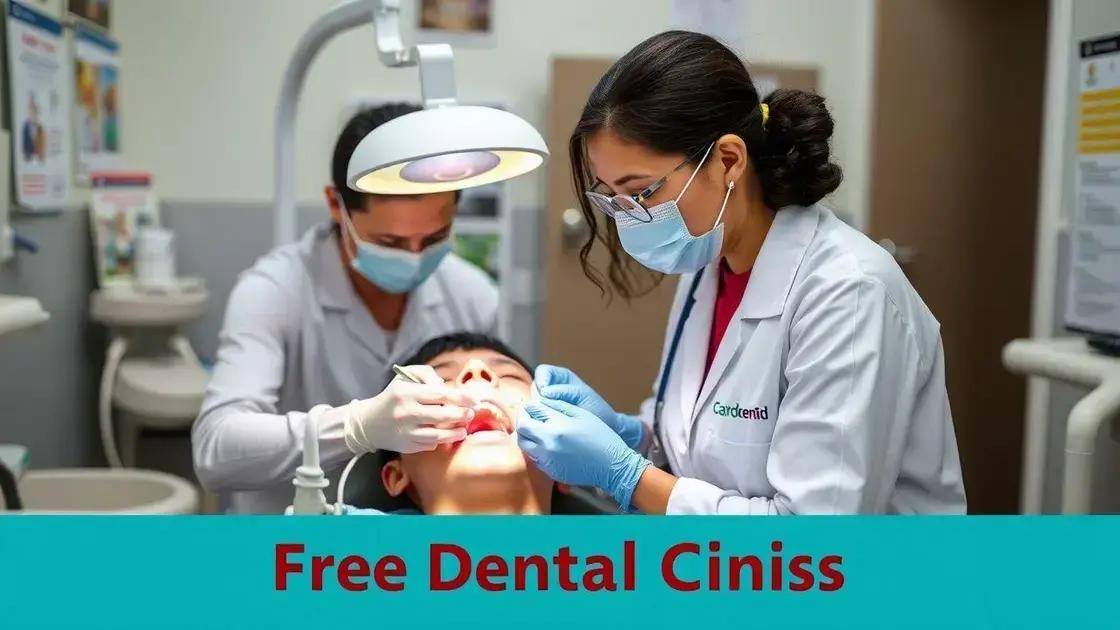
Many free dental clinics offer a variety of essential services to ensure everyone gets the care they need. Understanding these services can help individuals seek help when they need it the most. Knowing what is available is the first step to better oral health.
Preventive Care
Preventive care is at the heart of dental treatment. This includes:
- Dental cleanings, which help maintain oral hygiene.
- Exams to detect potential issues early.
- X-rays to get a clear picture of dental health.
Such services aim to prevent dental problems before they start, promoting good habits and healthy teeth.
Basic Treatments
In addition to preventive care, many clinics provide basic treatments. These might involve:
- Fillings for cavities.
- Extractions when a tooth is too damaged to save.
- Root canals to treat infected teeth.
Offering these services ensures that patients who need urgent care can get it without worrying about costs. Many clinics prioritize quick access to necessary treatments.
Sometimes, clinics also have partnerships with local specialists or universities to offer more complex procedures, like crowns or dentures, at reduced costs. This means that even more complex needs can often be met.
Education and Outreach
Education is another key service provided by free clinics. Patients often receive valuable information on:
- Proper brushing and flossing techniques.
- The importance of regular dental visits.
- Tips for maintaining oral health on a budget.
By focusing on education, these clinics empower individuals to take control of their dental health and make informed decisions. Knowledge is just as important as treatment in achieving a healthy smile.
How to find free dental treatment
Finding free dental treatment can seem challenging, but with the right tools and resources, it’s easier than you might think. Many communities offer services designed to help individuals access essential oral health care without the burden of costs.
Start with Online Research
The internet can be a valuable resource for discovering local clinics. Look for keywords like “free dental clinics near me” or “low-cost dental services”. Websites operated by health departments often list available services. You can also find community health centers that offer dental care.
Utilize Community Resources
Community organizations play a vital role in connecting people with healthcare. Reach out to:
- Local non-profits that focus on health services.
- Churches or community groups that may host dental health events.
- Public health departments that provide information about available resources.
Many organizations work to bridge the gap between patients and the services they need.
Check with Dental Schools
Your nearest dental school can be another excellent option for affordable care. These institutions often offer services at reduced rates, as students perform procedures under the supervision of experienced faculty. This allows you to receive quality dental care while helping students learn.
It’s beneficial to call ahead to see what services are available and if appointments are necessary. Additionally, some schools may have special events where they offer free dental services to the community.
Inquire at Local Health Fairs
Health fairs are often held in various communities and can be a great way to access free dental treatment. These events typically feature dental professionals offering free screenings and advice. Attending these fairs can provide valuable information while connecting you with services.
It’s a good idea to keep an eye on local community centers or libraries for announcements about upcoming health fairs.
Tips for maximizing free dental care
Maximizing free dental care involves knowing how to navigate the resources available to you. With a little planning and awareness, you can make the most of these services. Here are some effective ways to ensure you receive the care you need.
Stay Informed About Services
Knowledge is key when it comes to finding available treatments. Be sure to:
- Regularly check local clinics for updates on services offered.
- Follow community boards or social media pages related to health services.
- Inquire about new programs or seasonal free treatment events.
By keeping yourself informed, you won’t miss opportunities for free dental services.
Build Relationships with Providers
Having a good relationship with your dental providers can lead to better care. Try to:
- Communicate openly about your needs and concerns.
- Ask for referrals for other services if necessary.
- Participate in community events hosted by dental professionals.
Building rapport can make a significant difference in your experience and the quality of care received.
Be Proactive About Appointments
Staying on top of your dental care is crucial. Make it a point to:
- Schedule regular check-ups as recommended.
- Arrive on time to maximize your visit’s effectiveness.
- Follow up on any referrals for specialized treatments.
These steps can help ensure that your dental health doesn’t take a backseat.
Utilize Preventive Resources
Taking advantage of preventive resources can help reduce the need for more extensive treatments later. Be sure to:
- Attend workshops on oral hygiene.
- Practice good dental habits at home, such as brushing and flossing regularly.
- Utilize free dental education resources provided by clinics.
Prevention is often the most cost-effective approach to maintaining oral health.
FAQ – Frequently Asked Questions about Free Dental Treatment Options
What types of services can I get for free at dental clinics?
Free dental clinics typically offer preventive care, basic treatments like fillings and extractions, and educational resources about oral hygiene.
How can I find free dental clinics near me?
You can search online for free dental clinics, check local health department listings, and inquire with community organizations for available services.
What is the eligibility criteria for free dental treatment?
Eligibility often depends on your income level and whether you have dental insurance. Many clinics prioritize underserved populations.
How can I maximize my experience at a free dental clinic?
Stay informed about services, build relationships with providers, keep your appointments, and utilize preventive resources offered by the clinic.