Community involvement in improving school lunches enhances meal quality and nutrition for students by engaging parents, local farms, and organizations to create a healthier dining environment.
School lunch support 2025 plays a vital role in our children’s health and education. Have you ever wondered how these programs keep evolving? Let’s dive into the ways they affect our schools and communities.
Understanding school lunch support in 2025
Understanding school lunch support in 2025 is essential for parents, educators, and communities. It’s amazing how much these programs evolve to meet children’s needs. As we look forward, various factors come into play in shaping these meals.
Meeting Nutritional Guidelines
In 2025, schools must adhere to strict nutritional guidelines set by governments. These guidelines aim to provide balanced meals that fuel children’s learning and growth. It’s not just about filling plates, but ensuring kids receive the right nutrients.
Importance of Local Farms
Increasingly, schools are collaborating with local farms. This partnership supports local economies and provides fresh produce. With this initiative, students enjoy more flavorful fruits and vegetables.
- Enhances the quality of meals
- Supports the community
- Teaches students about local agriculture
As students learn more about where their food comes from, they develop healthier eating habits. Understanding this connection is important.
Funding Sources for Lunch Programs
Funding for lunch programs in schools often comes from various sources. Understanding these can help communities advocate for better meals.
- Federal and state programs
- Grants from non-profits
- Community donations
This funding is crucial for providing nutritious options and ensuring that no child goes hungry. With adequate support, schools can serve diverse and appealing meals.
Community involvement also plays a key role in school lunch support. Schools who engage local parents and organizations often see improvements in meal quality. This interaction leads to discussions about what children enjoy and need in their diets.
Overall, understanding school lunch support in 2025 highlights the importance of nutrition, community collaboration, and financial backing to create healthier futures for children.
Key nutritional guidelines for school meals
Key nutritional guidelines for school meals are essential in shaping a healthy future for students. These guidelines ensure that meals served at schools meet the dietary needs of growing children. It’s surprising how much thought goes into planning these menus.
Balanced Meals
A balanced meal typically includes a variety of food groups. Schools focus on serving meals rich in nutrients like:
- Fruits and vegetables
- Whole grains
- Lean proteins
- Low-fat dairy
These components play a crucial role in fueling students’ energy for the day. Incorporating colorful fruits and vegetables makes meals not only nutritious but also appealing.
Portion Sizes
Portion control is another critical piece of the puzzle. Following guidelines helps prevent overeating and ensures children get the right amounts of food. Schools often use standard serving sizes to keep meals consistent.
For instance, children should receive appropriate servings of grains, proteins, and vegetables, depending on their age group. This prevents waste and offers students the nutrients they need without excess.
Minimizing Processed Foods
Minimizing the use of processed foods is vital for enhancing meal quality. Instead, schools are encouraged to use fresh, whole ingredients. Reducing added sugars and sodium is also a priority to promote better health.
When meals are prepared with fresh items, students are more likely to enjoy their lunches. This enjoyment encourages them to make healthier choices, setting the stage for lifelong habits.
Understanding these nutritional guidelines empowers everyone involved, from parents to school staff, to make informed choices about what children eat. As we move toward 2025, refining these guidelines will only enhance the school meal experience.
The role of local farms in school lunch programs
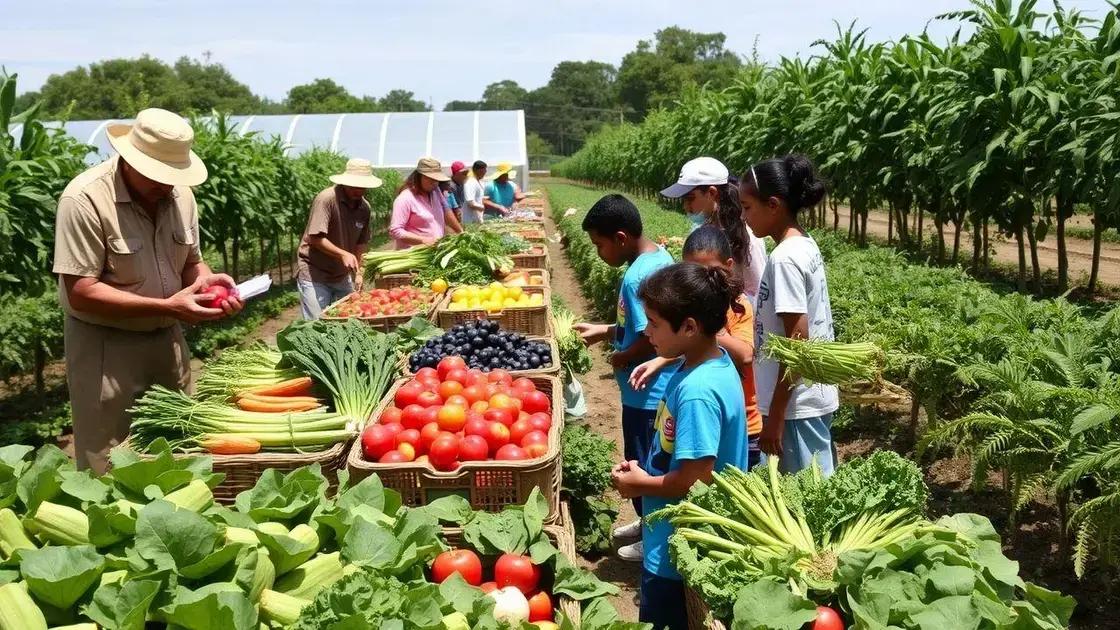
The role of local farms in school lunch programs is becoming increasingly important. Connecting schools with nearby farms offers numerous benefits for students and the community. These partnerships help provide fresh and nutritious foods for school meals.
Fresh Produce Supply
Local farms can supply schools with fresh fruits and vegetables. This ensures that meals are not only healthy but also full of flavor. Eating fresh produce encourages children to develop a taste for nutritious foods.
- Improved taste and quality
- Higher nutrient content
- Less waste from spoilage
When students eat fresh, they are more likely to enjoy their meals. They learn about the importance of choosing healthy foods, which can affect their lifelong eating habits.
Supporting the Local Economy
Working with local farmers boosts the local economy. Schools that buy from nearby farms help support small businesses in their communities. This relationship fosters a sense of community pride and ownership.
As children learn about local agriculture, they develop a better understanding of where their food comes from. Such connections strengthen their appreciation for local resources and the environment.
Additionally, local farms often engage in educational activities with schools. These can include farm visits, workshops, and cooking classes. Such experiences enhance students’ knowledge about nutrition and sustainability.
Overall, the integration of local farms into school lunch programs enriches the eating experience for students and creates a brighter future for community agriculture. Understanding this role is key to building a sustainable food system.
Funding sources for school lunch initiatives
Funding sources for school lunch initiatives are vital for providing healthy meals to students. Understanding where this funding comes from can help schools maintain quality lunch programs. Schools rely on various sources to ensure that every child has access to nutritious food.
Government Programs
One of the primary funding sources is government aid. Both federal and state programs provide financial support for school meal programs. These initiatives help cover the costs of purchasing ingredients and preparing meals.
- National School Lunch Program (NSLP)
- School Breakfast Program (SBP)
- Farm to School Grant Program
These funding opportunities are designed to support schools in providing balanced and affordable meals. Schools benefit significantly from these programs, allowing them to serve meals that meet nutritional guidelines.
Local Organizations and Grants
In addition to government support, many local organizations contribute to school lunch funding. Non-profits and community foundations often offer grants specifically aimed at improving meal quality.
These grants can be used for various purposes such as:
- Purchasing kitchen equipment
- Implementing nutrition education programs
- Creating garden-based learning
By securing funding from local organizations, schools can better meet the needs of their students and create innovative initiatives that enhance meal offerings.
Community involvement also plays a crucial role in funding. Donations from parents and local businesses can help supplement existing funding. This support can be instrumental in expanding programs and ensuring food security.
Overall, understanding the diverse funding sources for school lunch initiatives allows schools to build robust programs that prioritize nutrition and health for all students.
Community involvement in improving school lunches
Community involvement in improving school lunches plays a crucial role in ensuring that children receive the nutrition they need. By bringing together parents, local organizations, and schools, communities can create a more supportive environment for healthy eating.
Engaging Parents
Parents are often the first line of support for school lunch programs. When parents are actively engaged, they can advocate for better food options. They can voice their concerns and suggestions during school meetings or through surveys.
- Participating in lunch menus decisions
- Volunteering in school gardens
- Organizing fundraisers for better food
When parents take an active role, it encourages the school to prioritize nutritious options. Their involvement can lead to healthier meal choices and a more aware school community.
Collaboration with Local Organizations
Local non-profits and health organizations can offer resources and support to improve school lunches. They may provide funding, expertise, or volunteers to help with meal preparation.
Some organizations even run programs aimed at teaching children about nutrition. By partnering with these groups, schools can enhance their lunch offerings and promote healthy eating habits.
Examples of community programs include:
- Nutrition workshops for students
- Cooking classes for parents and kids
- Farmers markets featuring local produce
These initiatives not only improve the quality of food served but also foster a sense of community pride and responsibility for children’s health.
When the community comes together to support school lunch programs, it creates lasting change. Understanding the importance of community involvement in improving school lunches helps build a stronger, healthier future for all kids.
FAQ – Frequently Asked Questions about Community Involvement in School Lunch Programs
Why is community involvement important for school lunches?
Community involvement helps ensure that children receive nutritious meals and fosters a supportive environment for healthy eating.
How can parents participate in improving school lunches?
Parents can advocate for better food choices, volunteer for activities, and engage with the school regarding lunch programs.
What role do local farms play in school lunch programs?
Local farms provide fresh produce and support the local economy, enhancing the quality of food served in schools.
How do local organizations support school lunch initiatives?
Local organizations offer resources, funding, and educational programs that help improve meal quality and promote nutrition.