Affordable connectivity benefits provide low-income households access to the internet at reduced rates, crucial for enhancing education and employment opportunities while addressing the digital divide.
Affordable connectivity benefits are changing the way we interact with technology, making essential resources more accessible for everyone. Have you ever wondered how increased internet access might transform your daily life? Let’s explore this vital topic.
Understanding affordable connectivity benefits
Understanding affordable connectivity benefits is crucial in today’s digital world. These benefits are designed to help individuals and families access the internet at a lower cost, ensuring that everyone can participate fully in society.
What Are the Key Benefits?
These programs provide several advantages. Here are some critical points:
- Cost savings on monthly internet bills.
- Access to educational resources for students.
- Opportunity for remote work and telehealth services.
In addition to saving money, affordable connectivity provides users with essential tools. The internet has become integral to job searching, networking, and learning. Affordable connectivity benefits ensure that more people can make use of these opportunities.
Who Benefits the Most?
Low-income households, students, and seniors often see the most significant impact from these programs. They face unique challenges when it comes to digital access. By offering reduced rates, programs help bridge the digital divide.
It’s not just about saving money; it’s about enhancing quality of life. Many people find that with better access, they can pursue further education and improve job prospects. The ripple effect of these benefits can change lives.
How to Maximize These Benefits?
To truly take advantage of affordable connectivity benefits, users should:
- Research available programs in their area.
- Stay informed about eligibility criteria.
- Utilize the internet for educational and professional growth.
Promoting awareness about these benefits can empower more individuals to enroll and thrive in a digital world.
Accessing technology is not just a luxury; it is a necessity. Affordable connectivity benefits make sure that all members of our community can connect and succeed. Engaging with such resources can lead to significant changes in many aspects of life.
Who is eligible for connectivity benefits?
Who is eligible for connectivity benefits? Understanding the qualifications can help many people gain access to essential internet services. Various programs have different criteria, but many share common eligibility factors.
Eligibility Criteria
Here are key factors that generally determine eligibility:
- Income level: Households with incomes at or below 200% of the federal poverty guidelines often qualify.
- Participation in government assistance programs: Programs like SNAP, WIC, or Medicaid can indicate eligibility.
- Educational needs: Students enrolled in free or reduced-price lunch programs are typically eligible.
Many individuals don’t realize that they may qualify simply by being part of certain assistance programs. This can make a big difference in accessing reliable internet.
Specific Groups Benefiting
Several groups benefit significantly from these connectivity benefits. For instance, low-income families often face barriers that limit their access to educational and job opportunities. Seniors and individuals with disabilities are also notably impacted. By identifying the unique needs of these populations, programs can tailor their benefits more effectively.
Furthermore, understanding your eligibility can unlock resources that may have seemed out of reach. Many providers actively encourage applications to ensure everyone receives the support they need.
Steps to Determine Eligibility
To find out if you qualify for connectivity benefits, take the following steps:
- Visit official websites to review program guidelines.
- Gather necessary financial documents to support your application.
- Contact local community organizations for assistance.
Being informed is the first step towards accessing vital connectivity resources. These benefits are there to support individuals and families, making their lives more connected and resourceful.
How to apply for affordable connectivity benefits
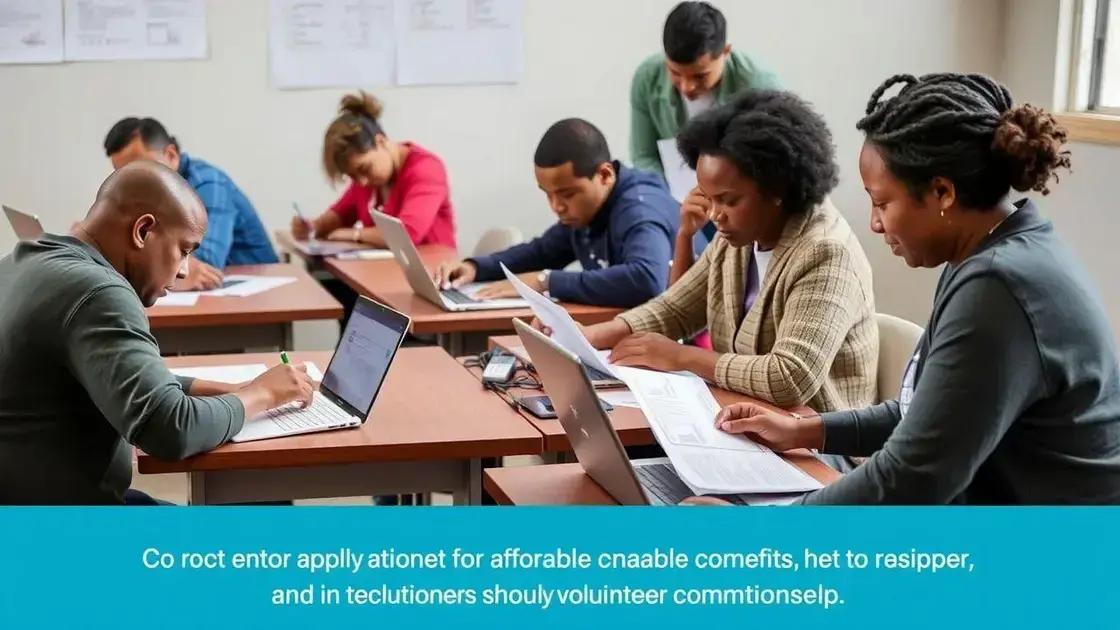
Applying for affordable connectivity benefits is a straightforward process that can make internet access affordable for many households. Knowing the steps can help individuals get connected quickly and easily.
Gather Necessary Information
Before starting your application, it’s essential to have certain documents ready. This includes personal identification, proof of income, and any eligibility documentation such as participation in government assistance programs.
Having everything organized helps to streamline the process. Make sure to check that your information is accurate to avoid delays in approval.
Choosing the Right Program
Different programs may offer various benefits. Some are specific to certain populations like students or seniors. Research local offerings, as well as federal programs, to find the best fit for your circumstances.
- Look into the Emergency Broadband Benefit (EBB) if you qualify.
- Check state and local assistance initiatives.
- Find out if your internet service provider participates in any programs.
By identifying the right program, you can maximize your benefits and support your family’s connectivity needs.
Completing the Application
Once you have chosen the appropriate program, it’s time to fill out the application. Many applications are available online, making them easy to complete. Follow these steps as you apply:
- Visit the official website for the program.
- Fill out the required forms with accurate information.
- Submit your supporting documentation as outlined in the application.
After submitting your application, it’s essential to monitor your email or phone for any communications regarding your application status. Patience may be necessary, but following up can ensure you stay informed.
Utilizing Assistance Resources
If you encounter challenges during the application process, seek help. Local organizations and community groups often have resources to assist with applications and guide you through the process. They can help clarify any confusion and ensure you meet all requirements.
Applying for affordable connectivity benefits opens doors to better internet access and connectivity. With the right approach, individuals can take advantage of these programs and enhance their ability to connect with essential resources.
Impact of connectivity on education and employment
The impact of connectivity on education and employment is profound and far-reaching. Access to the internet has transformed how students learn and how job seekers find opportunities. With reliable connectivity, both students and workers can achieve their goals more effectively.
Benefits for Education
Connectivity has opened up educational resources that were once inaccessible to many. Online learning platforms offer courses from top institutions, allowing students to learn at their own pace. With the right tools, they can easily connect with teachers and peers, enhancing their educational experience.
- Access to online libraries and research papers.
- Opportunities for virtual tutoring and extra help.
- Engagement in collaborative learning through group projects.
These resources can significantly boost a student’s knowledge and skills. For many, it offers a pathway to higher education that may not have been possible otherwise.
Influence on Employment
In terms of employment, connectivity plays a critical role in job searching. Many companies now post job openings online. Job seekers can apply for positions, submit resumes, and even attend virtual interviews, all from the comfort of their homes. This accessibility allows for a broader range of job opportunities.
Moreover, employees working remotely rely heavily on connectivity to perform their tasks efficiently. Without internet access, productivity can drastically decrease.
Challenges and Solutions
However, there are still challenges that can hinder the impact of connectivity. Not everyone has equal access to reliable internet. This digital divide can create disparities in both education and employment opportunities. Recognizing and addressing these issues is vital for ensuring that everyone benefits.
- Advocating for better infrastructure in underserved areas.
- Implementing community programs to provide low-cost access.
- Encouraging policy changes to support digital equity.
By tackling these challenges, we can enhance the transformative power of connectivity in education and employment.
Exploring challenges and solutions to connectivity coverage
Exploring challenges to connectivity coverage reveals many obstacles that people face. Despite advancements in technology, not everyone has reliable access to the internet. This gap can hinder education, employment, and access to essential services.
Common Challenges
One of the primary challenges is geographical barriers. Rural areas often have limited infrastructure, making it difficult to install high-speed internet. Furthermore, low-income households may struggle to afford the equipment necessary for a reliable connection.
- Limited broadband availability in rural areas.
- High costs of internet service and devices.
- Lack of digital literacy among some populations.
Understanding these challenges is the first step towards finding effective solutions. It’s essential to recognize the diversity in experiences to address the various needs of communities.
Potential Solutions
Several solutions can help improve connectivity coverage. Government initiatives can play a key role in expanding internet access and affordability. Programs that encourage competition among internet service providers can also lead to better options for consumers.
Community programs are vital. Local organizations can provide training for digital literacy, helping individuals navigate online resources more effectively. Collaborations with tech companies to provide affordable devices are also essential.
- Expanding public Wi-Fi access in community centers and libraries.
- Implementing subsidies for low-income families to access the internet.
- Building and improving infrastructure in underserved areas.
Each community may require a tailored approach to overcome connectivity challenges. By engaging stakeholders at various levels, it is possible to create a comprehensive strategy to improve internet access for all.
In conclusion, enhancing connectivity is essential for bridging the gap in education and employment opportunities. By understanding the challenges and implementing effective solutions, communities can ensure everyone benefits from digital access. With the right support and resources, we can create an environment where connectivity is available to all, empowering individuals to succeed in a technology-driven world.
FAQ – Questions About Affordable Connectivity Benefits
What are affordable connectivity benefits?
Affordable connectivity benefits are programs designed to help low-income households access the internet at reduced rates, ensuring digital access for all.
Who qualifies for these benefits?
Eligibility typically includes low-income families, students in free or reduced lunch programs, and individuals participating in government assistance programs.
How can I apply for these benefits?
You can apply by visiting the official program websites, gathering necessary documentation, and submitting your application online.
What impact does connectivity have on education?
Connectivity enhances education by providing access to online resources, enabling remote learning, and facilitating communication with teachers.