Tuition-free public colleges eliminate financial barriers, promoting equitable access to higher education and fostering a more educated workforce that benefits society economically and socially.
Tuition-free public colleges are gaining attention as a viable model for accessible education. Have you thought about how this could change the lives of countless students?
Understanding tuition-free public colleges
Understanding tuition-free public colleges is essential for grasping the changes in higher education today. These institutions focus on removing financial barriers that keep students from pursuing their dreams.
What are tuition-free public colleges?
These colleges offer education without charging tuition fees directly to students. They are designed to support those who might struggle to pay for traditional college expenses. Many states are adopting this model to increase access to higher education.
Key features of tuition-free public colleges
- No tuition fees allow students to focus on their studies.
- Income-based eligibility can help those who need it most.
- Potential partnerships with local businesses support job placement.
- Wide range of programs and degrees to fit different career paths.
Adopting tuition-free public colleges could fundamentally alter how we view higher education. Imagine entering college without the burden of student loan debt! This change is already influencing the decisions of students across the country.
Many students and families worry about how they will afford college. By offering free education, these colleges aim to alleviate financial stress. They also promote a more educated workforce, contributing positively to the economy.
Benefits of tuition-free education
There are several benefits to attending a tuition-free college:
- Greater access for low-income students
- Increased enrollment rates in higher education
- Less financial stress for graduates
- Improved societal outcomes.
With the potential for widespread impact, these colleges could change the landscape of education for many students. Students can focus more on learning and less on how to pay for it.
Benefits of free education for students
Many people wonder about the benefits of free education for students. This model has the potential to transform lives and communities. By removing financial barriers, students can focus on what truly matters: learning and personal growth.
Enhanced access to education
One of the biggest advantages of free education is that it opens doors to students who may not have had the chance to attend college otherwise. This increased access can lead to:
- Higher enrollment rates among diverse populations
- Opportunities for first-generation college students
- A more educated workforce
- Reduction in the skills gap in various industries.
With tuition-free public colleges, education becomes a right rather than a privilege, ensuring that more individuals can strive for their aspirations without the burden of debt.
Reduction of financial stress
Student debt is a significant issue in today’s society. By offering free education, students can avoid the stress of crippling loans. This relief allows them to:
- Concentrate on their studies
- Pursue internships or part-time jobs without overwhelming pressure
- Engage in extracurricular activities that enhance their college experience.
Moreover, young adults will have a better chance at financial stability right after graduation, allowing them to invest in their futures.
Free education doesn’t just bolster individual success; it can also lead to societal benefits. A more educated population often results in less crime, better civic engagement, and improved healthcare outcomes. Additionally, a strong, knowledgeable workforce attracts businesses and innovation to local communities.
How tuition-free colleges impact society
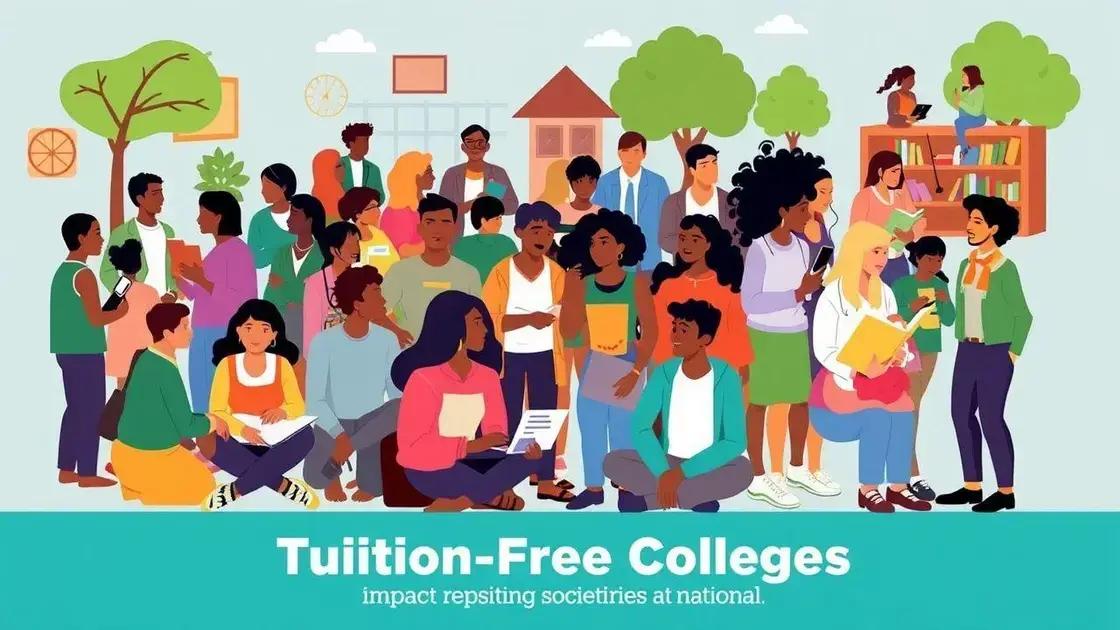
Understanding how tuition-free colleges impact society is crucial as we explore the future of education. These institutions create ripple effects that reach far beyond the classroom.
Economic benefits
Tuition-free colleges can strengthen the economy by creating a more educated workforce. When more people gain degrees, industries can access skilled workers who can drive innovation and productivity. This leads to:
- Higher earnings potential for graduates
- Increased consumer spending
- Stronger job markets
- Less reliance on social services.
When students graduate without debt, they can invest in homes, businesses, and other ventures, contributing positively to their communities.
Social equity advancements
These colleges play a vital role in promoting social equity. By removing tuition fees, they allow students from diverse backgrounds to pursue higher education. This access can lead to:
- More representation in various fields
- Improved community relations
- Increased civic engagement
- Lower crime rates.
As education becomes more inclusive, society as a whole benefits from various perspectives and experiences, fostering understanding and collaboration.
Moreover, tuition-free education can reduce the stigma associated with lower-income students attending college. It creates an environment where anyone can aspire to succeed academically, regardless of their financial background.
In conclusion, the existence of tuition-free colleges has transformative potential for society. The widespread realization of education as an accessible right ensures that communities flourish and progress together.
Challenges of implementing tuition-free programs
Implementing tuition-free programs presents several challenges that must be addressed. Understanding these obstacles is key to developing effective solutions.
Funding sources
One of the primary challenges is finding adequate funding to support these initiatives. Unlike traditional tuition models, tuition-free colleges require substantial financial backing. States and institutions must identify consistent funding streams, which can involve:
- Increasing taxes or reallocating existing budgets
- Securing public-private partnerships
- Utilizing endowments or grants.
Without reliable funding, programs may struggle to sustain operations or expand accessibility.
Political support
Gaining political support is another critical hurdle. Policymakers may be divided on the merits of implementing tuition-free programs. Engaging stakeholders and the community can help build consensus. Key strategies include:
- Raising public awareness about the benefits of free education
- Soliciting input from educational experts and economists
- Demonstrating success stories from existing programs.
By fostering dialogue, advocates can create stronger foundations for policy changes.
Moreover, public perception can impact funding and support. Some may worry that tuition-free programs decrease education quality. It is essential to address these concerns through transparency and accountability. Showing measurable outcomes will help build confidence in these initiatives.
Finally, managing program implementation effectively is crucial. Institutions must ensure that resources, support services, and infrastructure meet the increased demand for education. This coordination can require additional staff training, updated technologies, and comprehensive student support systems.
Future of higher education in America
The future of higher education in America is evolving rapidly. With the rise of tuition-free colleges, new opportunities and challenges lie ahead for students and institutions alike.
Shifting educational models
The focus on making college accessible is driving changes in educational models. More colleges are adopting blended learning approaches, combining online and in-person classes. This flexibility allows students to:
- Balance work and study more effectively
- Access a wider range of resources
- Learn at their own pace.
As technology continues to shape the educational landscape, we can expect further innovations to improve learning experiences.
Increased emphasis on equity
Another significant trend is the emphasis on equity in education. The push for tuition-free public colleges aims to close the gap between different socioeconomic groups. By addressing financial barriers, institutions can promote:
- Greater diversity on campuses
- Increased graduation rates for underrepresented students
- Enhanced social mobility through education.
As society recognizes the importance of education for all, policies must adapt to meet these changing needs.
Additionally, employers are increasingly focused on skills and competencies rather than traditional degrees. This shift may lead colleges to rethink their curricula and focus on practical, real-world applications. Programs that foster critical thinking, creativity, and collaboration will become even more valuable in the job market.
Overall, the landscape of higher education in America is set to transform significantly in the coming years. With the focus on making college more affordable and equitable, it lays the groundwork for a more educated and skilled workforce.
FAQ – Frequently Asked Questions about Tuition-Free Colleges
What are tuition-free colleges?
Tuition-free colleges are institutions that do not charge students tuition fees, allowing wider access to education for all.
How do tuition-free programs benefit society?
These programs promote social equity, reduce student debt, and create a more educated workforce, benefiting the economy and communities.
What challenges do tuition-free colleges face?
Challenges include securing stable funding, gaining political support, and managing the increased demand for educational resources.
How is technology changing higher education?
Technology is driving new learning models, enabling online classes, and fostering flexible, blended learning environments that meet diverse student needs.