Top savings accounts in 2025 offer higher interest rates, low or no fees, and features like automatic transfers to maximize your savings potential effectively.
Top savings accounts 2025 are crucial for anyone looking to enhance their financial growth. Are you making the most of your savings? Let’s dive into the best options available.
Key features of savings accounts
When considering a savings account, it’s essential to understand its key features. These features can significantly impact how well your money grows and how easily you can access it.
Interest Rates
One primary factor to consider is the interest rate. A higher rate means your savings will grow faster. Always compare rates offered by different banks.
Account Balance Requirements
Many savings accounts have minimum balance requirements. Keeping a certain amount in your account can affect the interest rates and fees. Be sure to check these details when choosing an account.
Access to Funds
Understanding how you can access your money is vital. Some accounts offer online and mobile banking, while others may have restrictions on withdrawals. Being aware of these policies can help you avoid unnecessary fees.
- Check for withdrawal limits
- Look into online banking options
- Understand fees associated with withdrawals
Fees are another aspect that shouldn’t be overlooked. Some accounts charge monthly maintenance fees. It’s important to look for accounts that offer waive fees options if you meet specific conditions.
Additionally, consider the type of financial institution. Traditional banks, credit unions, and online banks may offer different features. Online banks often provide higher interest rates due to lower overhead costs. Thus, acknowledging these distinctions can assist you in making a well-informed decision.
Ultimately, choosing a savings account requires careful consideration of these key features. Each element contributes to how effectively your funds can work for you.
How to choose the right savings account
Choosing the right savings account is crucial for effective money management. With so many options available, it’s important to understand what factors can help you select the best account for your needs.
Assess Your Financial Goals
Begin by assessing your financial goals. Are you saving for a specific purpose, like a vacation or education? Understanding your objectives will guide you in choosing an account that aligns with your plans.
Evaluate Interest Rates
Interest rates are a key factor. Look for accounts that offer competitive rates to maximize your savings potential. Higher rates translate to more earnings on your balance.
- Compare annual percentage yields (APY)
- Find promotional rates that may apply
- Consider fixed vs. variable interest rates
Next, consider the fees associated with each account. Some savings accounts have monthly maintenance fees, withdrawal fees, or other charges. It’s wise to choose an account with minimal fees to keep more money in your pocket as you save.
Accessibility is another important aspect. Determine how you want to access your funds. Some banks provide online banking, which makes managing your account easy. Others may restrict withdrawals or have limited customer support options.
Check Account Features
Look into the features offered by the accounts you are considering. Some accounts provide additional benefits like bonuses for meeting specific requirements or tools for budgeting and savings.
- Look for ATM access and online banking
- Consider features like round-up savings
- Evaluate mobile app functionality
Lastly, research the bank or credit union’s reputation. Reading customer reviews can give you insight into the bank’s reliability and service quality. A trusted institution can offer peace of mind as you save toward your goals.
Comparison of top savings accounts 2025
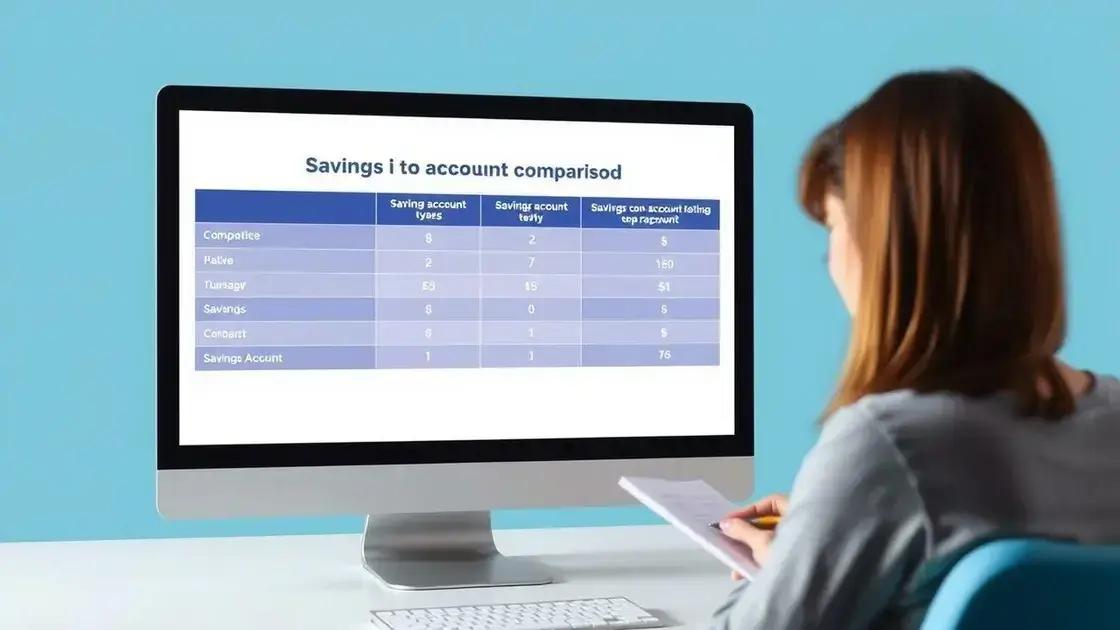
When evaluating different savings accounts, conducting a thorough comparison is essential. Each account can have its advantages, so understanding the differences helps in making the best choice for your financial needs.
Interest Rates
The interest rate is a key factor when comparing accounts. Some banks offer higher rates based on minimum balance requirements or certain account types. Always check the annual percentage yield (APY) to determine which account will grow your savings the fastest.
- Compare banks and credit unions
- Look for promotional rates
- Ensure rates are guaranteed for a set period
Next, consider any associated fees with each account. Monthly maintenance fees can diminish your savings over time. Seek out accounts with low or no fees to maximize your earnings. Some banks waive fees if you maintain a specific balance, so be aware of those requirements.
Accessibility Options
Accessibility to your funds is another important comparison point. Some accounts offer online banking, mobile apps, and ATM access, making it easier to manage your money on the go. In contrast, others may have limitations that could hamper your financial flexibility.
- Check for withdrawal limits
- Look at customer service availability
- Consider mobile deposit features
Additionally, account features vary widely across banks. Some accounts provide added benefits like budgeting tools, automatic transfers, or financial advisors. Assess which features align with your savings goals and financial habits.
A good comparison tool is to utilize comparison websites that aggregate information about numerous savings accounts. These resources allow you to quickly see side-by-side comparisons of rates, fees, and features.
Tips for maximizing your savings interest
Maximizing your savings interest is essential for growing your funds effectively. Several strategies can help you increase the returns on your savings account while minimizing fees and penalties.
Choose the Right Account
Start by selecting a high-yield savings account. These accounts typically offer higher interest rates than traditional savings accounts, allowing your money to grow faster. Always compare the interest rates and terms to ensure you are getting the best deal available.
Maintain a Healthy Balance
Keeping a higher balance in your account can help you earn more interest. Some banks offer tiered interest rates that increase as your balance grows. This means that the more you save, the more interest you earn. Aim to keep your balance above the minimum threshold to maximize your interest earnings.
- Check for minimum balance requirements
- Consider setting savings goals
- Review your account regularly
Additionally, consider setting up automatic transfers to your savings account. By regularly moving money from your checking to your savings, you can build your balance without thinking about it. This habit not only helps you save but also allows you to take advantage of compound interest over time.
Limit Withdrawals
Another way to increase your savings interest is to limit withdrawals. Savings accounts often have restrictions on the number of withdrawals you can make without incurring fees. Keeping your money in the account allows it to grow longer, enhancing the overall interest earned.
- Avoid unnecessary withdrawals
- Set up a budget to manage your spending
- Use your savings account for emergencies only
Finally, be sure to review and compare your options regularly. Banks and financial institutions frequently update their offerings. Keeping informed about new accounts with better rates can help you ensure you are earning the highest interest on your savings.
Understanding savings account fees
Understanding the fees associated with savings accounts is essential for managing your money wisely. Different accounts can carry various fees that may impact your overall savings.
Types of Fees
There are several common fees to be aware of when opening a savings account. These include monthly maintenance fees, ATM fees, and withdrawal penalties. Knowing these fees can help you choose the best account for your needs.
- Monthly maintenance fees can often be waived by meeting certain account requirements.
- ATM fees may apply if you withdraw cash from ATMs outside your bank’s network.
- Excessive withdrawal fees can occur when you go over a set number of withdrawals allowed per month.
Another important fee to consider is the inactivity fee. Some banks charge this fee if your account is dormant for a period of time. Being aware of this can prevent any unexpected charges from eroding your savings.
How to Avoid Fees
To avoid unnecessary fees, look for accounts with no monthly maintenance charges. Many banks now offer fee-free accounts, especially those that allow online banking. Be sure to ask about how to avoid fees, such as maintaining a minimum balance or setting up direct deposits.
- Set up direct deposit to meet the bank’s requirements.
- Regularly monitor your account balance to avoid going under the minimum.
- Check for any promotional offers that waive fees.
Understanding your savings account fees equips you with the knowledge to maintain your savings effectively. Regularly reviewing your account details will help you stay informed and minimize unnecessary costs.
FAQ – Frequently Asked Questions about Savings Accounts
What is a high-yield savings account?
A high-yield savings account offers a higher interest rate than regular savings accounts, allowing your money to grow faster.
How can I avoid fees on my savings account?
To avoid fees, choose accounts with no maintenance fees and meet the minimum balance requirements or set up direct deposits.
Why should I track my savings account balance?
Tracking your balance helps you avoid falling below minimums that could incur fees and ensures you are saving effectively.
What are the benefits of automatic savings transfers?
Automatic savings transfers help you save consistently and can make it easier to reach your financial goals by setting aside money regularly.