Apply for hardship assistance by gathering necessary documents, understanding eligibility requirements, and utilizing available resources to receive crucial support during financial difficulties.
Apply for hardship assistance and find the support you need during tough times. Many people face unexpected financial challenges, and knowing where to turn can be overwhelming. In this article, we’ll guide you through the process and offer tips to make your application smooth.
Understanding hardship assistance
Understanding hardship assistance is crucial for anyone facing unexpected financial challenges. This type of support can significantly ease your burden during tough times. It provides temporary relief to individuals and families who find themselves in difficult situations due to factors beyond their control.
Many people wonder how hardship assistance works and who qualifies for it. Understanding these details can help you take the first steps toward obtaining the help you need. Generally, hardship assistance is designed for those experiencing financial difficulties, such as job loss, illness, or other emergencies.
Eligibility Criteria
To qualify for hardship assistance, most programs look at your current financial situation. This includes factors like income, expenses, and any related circumstances. Specific qualifications may vary, but typically you need to prove:
- That you have a temporary inability to pay your bills.
- Your current income is below a set threshold.
- You are in good standing with previous financial commitments.
By meeting these criteria, you increase your chances of being approved for assistance. It’s essential to gather your financial records, as many programs will ask for documentation to support your application.
How to Access Hardship Assistance
Accessing hardship assistance is usually straightforward. You can find available programs through local government websites, non-profit organizations, or community resources. Here are some common steps to follow:
- Research available programs in your area.
- Prepare necessary documentation and proof of your hardship.
- Complete any application forms required.
After submitting your application, be patient as processing times can vary. Stay in contact with the organization to ensure you receive updates on your application status.
Understanding the nuances of hardship assistance makes the journey through financial troubles more manageable. Whether you’re dealing with temporary loss of income or unexpected medical bills, knowing that support is available can bring peace of mind. Remember, you are not alone, and there are resources ready to help.
Eligibility requirements for assistance
Eligibility requirements for assistance are essential to understand before applying for hardship support. Knowing what is needed can help streamline your application process. Many assistance programs have specific criteria that applicants must meet to qualify for help.
Typically, these requirements can include factors such as financial status, personal circumstances, and sometimes geographical location. For most programs, your financial need must be clearly demonstrated.
Common Requirements
While each program may have unique guidelines, some general eligibility criteria often remain consistent across various types of hardship assistance. Here are some common requirements:
- You must demonstrate a temporary financial crisis.
- Your income is generally below a specified threshold.
- Documentation of your current financial situation is usually needed.
These requirements are in place to ensure that the assistance reaches those who need it most. It’s important to prepare your documentation in advance. Gathering necessary paperwork can include bank statements, tax returns, or proof of job loss.
Verification Process
The verification process can vary depending on the organization providing the assistance. Many agencies will conduct an assessment of your financial needs. This may involve interviews, background checks, or requests for additional paperwork. Be prepared to provide detailed information about your household income and expenses.
Additionally, you might need to explain your situation in more detail. It helps to present your case clearly and truthfully, as transparency is key in securing aid quickly. If any documents are missing, it can delay the evaluation of your application.
Overall, understanding the eligibility requirements for hardship assistance will empower you as you navigate through your options. Being informed will help you gather the necessary information to increase your chances of receiving support when you need it most.
Steps to apply for hardship assistance
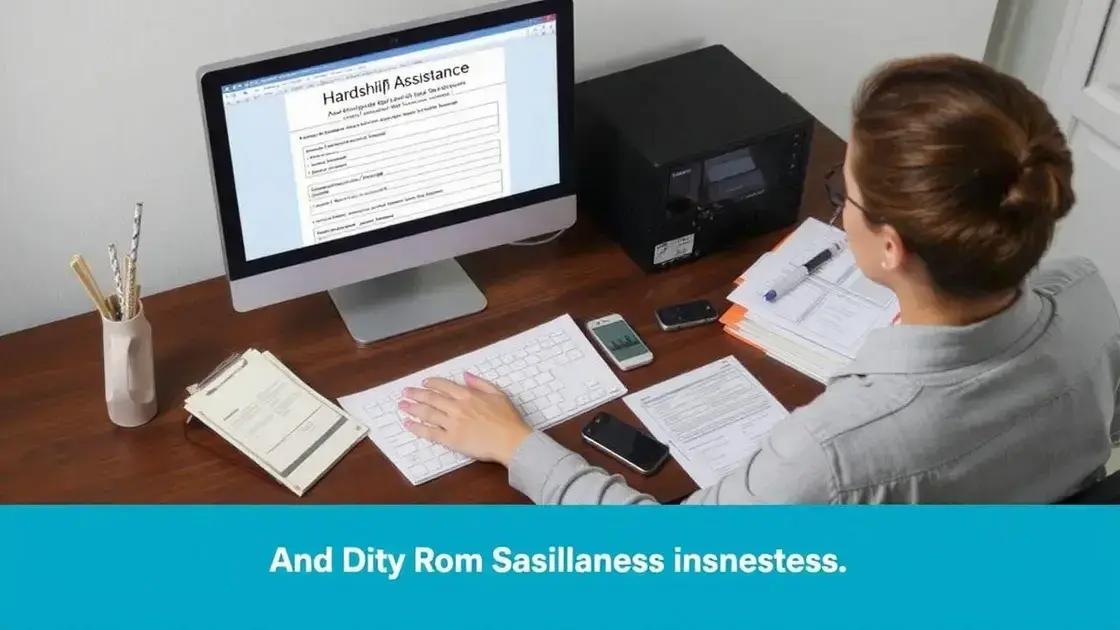
Steps to apply for hardship assistance are crucial for anyone seeking help during tough financial times. Following these steps can simplify the process and increase your chances of receiving support. Knowing what to expect can make a significant difference.
The first thing to do is find the right program that suits your needs. There are many organizations that offer hardship assistance. Some may be local government programs, while others might be non-profit organizations. Researching options is essential, as each program may have different criteria.
Gather Required Documentation
Before you apply, ensure you have all necessary documents ready. This can include:
- Your identification, such as a driver’s license or passport.
- Proof of income, like pay stubs or tax returns.
- Bank statements that show your financial situation.
Having these documents organized will make the application process much smoother. Many programs require these documents to verify your financial condition and determine eligibility.
Complete the Application Form
Once you have everything ready, it’s time to fill out the application form. This may be available online or in a physical format, depending on the organization. Be sure to provide accurate information, as any discrepancies can delay your application.
In some cases, you might need to explain your situation in the application. Clear and concise explanations can help the reviewers understand your need for assistance, making it more likely to approve your request.
Submit Your Application
After completing the application, submit it according to the provided instructions. Pay attention to deadlines, as many programs may have specific timeframes for applications. It’s also a good idea to keep a copy of your application for your records.
After you’ve submitted your application, be patient. Processing times can vary from one program to another. Many organizations will contact you for follow-up information, so it’s important to stay reachable.
Understanding and following these steps will guide you smoothly through the process of applying for hardship assistance. Remember that seeking help during difficult times is a proactive step forward, and many resources are available to support you.
Documents needed for your application
Documents needed for your application are essential to prepare in advance when applying for hardship assistance. Having the right paperwork can make your application process smoother and faster. Each program may have different requirements, so it’s crucial to know what to gather.
Typically, the essential documents include proof of identity, financial information, and other relevant materials that demonstrate your current situation. Collecting these documents early helps avoid delays in your application.
Common Documents Required
Most assistance programs will require specific types of documentation. Here are some common items you may need to provide:
- A government-issued ID, like a driver’s license or passport.
- Proof of income, such as recent pay stubs or tax returns.
- Bank statements showing your financial activity over the past few months.
Other documents that may be necessary include rental or mortgage agreements, utility bills, and any medical bills if applicable. These items help the organization better understand your financial situation and need for assistance.
Organizing Your Documents
Keeping your documents organized is important. Consider creating a folder, either physical or digital, where you can store everything needed for your application. Having everything in one place makes it easier to find when you need to submit your application.
When filling out the application, ensure that all information is accurate and matches the documents submitted. Discrepancies can lead to delays or even denial of assistance. Being thorough in your application increases your chances of approval.
Ultimately, providing the correct documents is key to a successful application for hardship assistance. Be prepared, and don’t hesitate to ask the organization if you have questions about specific requirements.
Resources for additional support
Resources for additional support are vital for individuals seeking assistance beyond the initial hardship programs. Knowing where to turn for help can make navigating financial struggles easier. Various organizations and services are available, each providing unique types of support that may suit different needs.
Beyond hardship assistance, you can find resources that offer financial literacy, counseling services, and even job training. These programs help not only with immediate financial relief but also with developing skills to avoid similar situations in the future.
Types of Support Resources
Here are some common types of resources you might consider:
- Non-profit organizations that provide financial aid or counseling.
- Government programs offering food assistance, healthcare, or job placement services.
- Community centers providing free workshops or seminars on financial management.
Additionally, many local churches or community groups may offer temporary assistance. Don’t hesitate to reach out to these organizations—they often have a wealth of information and can guide you to further resources.
Online Resources
The internet also has a variety of tools that can help. Websites dedicated to financial education can provide valuable information on budgeting, managing debt, and saving money. Some popular sites include:
- Volunteer Income Tax Assistance (VITA) programs that offer free tax help.
- National Foundation for Credit Counseling (NFCC) for credit counseling and financial education.
- Regional crisis hotlines available for immediate support.
Utilizing these resources can empower you to take control of your financial situation, providing not only relief but also education for long-term success. Remember, seeking help from multiple sources can create a comprehensive support system. You do not have to face financial hardships alone.
In conclusion, applying for hardship assistance can provide crucial support during difficult financial times. By understanding the eligibility requirements and gathering the necessary documents, you can navigate this process more smoothly. Additionally, exploring available resources can offer ongoing support and education, empowering you to make informed financial decisions. Remember, you are not alone, and there are many organizations ready to help you every step of the way. Take the first step today toward regaining control of your finances and securing the assistance you need.
FAQ – Frequently Asked Questions about Hardship Assistance
What is hardship assistance?
Hardship assistance refers to financial support provided to individuals or families facing unexpected financial difficulties due to circumstances like job loss, medical emergencies, or natural disasters.
How do I know if I qualify for hardship assistance?
Qualifications vary by program but typically require you to demonstrate a temporary financial crisis, provide documentation of your income and expenses, and show proof of identity.
What documents do I need to apply for hardship assistance?
Common documents include a government-issued ID, proof of income (like pay stubs), bank statements, and any relevant bills that detail your financial situation.
Where can I find additional resources for support?
You can explore non-profit organizations, community centers, governmental programs, and online resources to find additional support and assistance tailored to your needs.