Rent relief programs provide essential financial assistance to tenants experiencing hardships, helping them avoid eviction and maintain stable housing during difficult times.
Rent relief programs USA offer vital support for those facing financial challenges. Have you or someone you know been struggling to meet rent payments? Understanding these programs can provide the assistance needed to stabilize housing situations.
Understanding rent relief programs in the USA
Understanding rent relief programs in the USA is crucial for anyone facing housing instability. These programs offer support to individuals and families who are struggling to pay their rent due to financial hardships. By exploring the resources available, renters can find the assistance they need to stay in their homes.
What are rent relief programs?
Rent relief programs are initiatives established by government agencies and non-profit organizations to help tenants who are experiencing financial difficulties. These programs may offer financial assistance for rent payments, eviction prevention services, and support in accessing other resources. Many of these programs have emerged in response to economic downturns or crises, such as the COVID-19 pandemic.
How do rent relief programs work?
Typically, these programs involve an application process where applicants must provide proof of income, housing conditions, and financial hardship. Support can vary significantly from one program to another. Let’s look at some essential features:
- Financial assistance with monthly rent payments.
- One-time payments versus ongoing support.
- Eligibility criteria based on income or employment status.
- Potential additional services like counseling or legal aid.
It’s essential for renters to familiarize themselves with both local and federal programs. Resources are often available at community centers or online platforms. Many states also maintain lists of available assistance programs to help residents find the right support.
Additionally, rent relief programs often have specific deadlines and requirements that applicants must meet. Being proactive in seeking help can make a significant difference. Many people may not realize that they qualify until doing thorough research.
Why is awareness important?
Awareness of rent relief programs can aid in preventing evictions. Renters who know about available resources can take the necessary steps before falling too far behind on their payments. Friends and family can also play a part in sharing this information within their communities.
Furthermore, staying informed about the latest updates and changes to these programs can enhance a renter’s ability to secure assistance. Programs can change rapidly due to new funding, government policies, or economic conditions.
Connecting with resources
It’s beneficial for renters to connect with local housing authorities or non-profit organizations for tailored assistance. Many cities have dedicated teams that can provide detailed information on rent relief programs available in their area. Engaging with these organizations also opens doors to additional resources like job training or financial counseling.
In conclusion, understanding rent relief programs in the USA can empower renters to navigate financial difficulties more effectively. By leveraging these programs and resources, individuals can secure their housing and improve their overall well-being.
Eligibility requirements for assistance
Eligibility requirements for rent relief programs can vary based on the specific program and location. Generally, these requirements help identify who needs assistance the most. Understanding these criteria is essential for renters seeking help.
Common eligibility criteria
Many programs require applicants to meet certain conditions. Here are some common eligibility factors:
- Proof of income: Renters must often provide documentation showing their income level.
- Demonstrated financial hardship: Applicants need to show substantial financial difficulties that affect their ability to pay rent.
- Residency status: Some programs only assist individuals living in specific areas or states.
- Rental agreements: Providing a lease agreement may be necessary to confirm housing status.
Meeting these criteria is crucial, as it helps ensure that the assistance goes to those who need it most. Additionally, some programs may have special considerations for specific groups, like veterans, seniors, or individuals with disabilities.
Income limitations
Most rent relief programs impose income limits to prioritize support for low-income families. These limits often align with local or federal poverty guidelines. For instance, applicants might need to earn below a certain percentage of the area’s median income. Understanding local income thresholds can aid in determining eligibility.
Moreover, temporary situations, like job loss due to unexpected events, can qualify individuals for quicker assistance. It’s vital for renters to communicate their current situations clearly when applying.
Application process
The application process for rent relief programs typically involves filling out forms and submitting necessary documentation. Renters may need to share personal and financial information, along with anything else that verifies their circumstances. Each program often has its process, so checking specific guidelines is critical.
For many applicants, the process can seem daunting. However, local non-profit organizations or housing authorities can provide assistance with navigating these applications. Engaging with these resources helps individuals understand their rights and options better.
Types of available rent relief programs
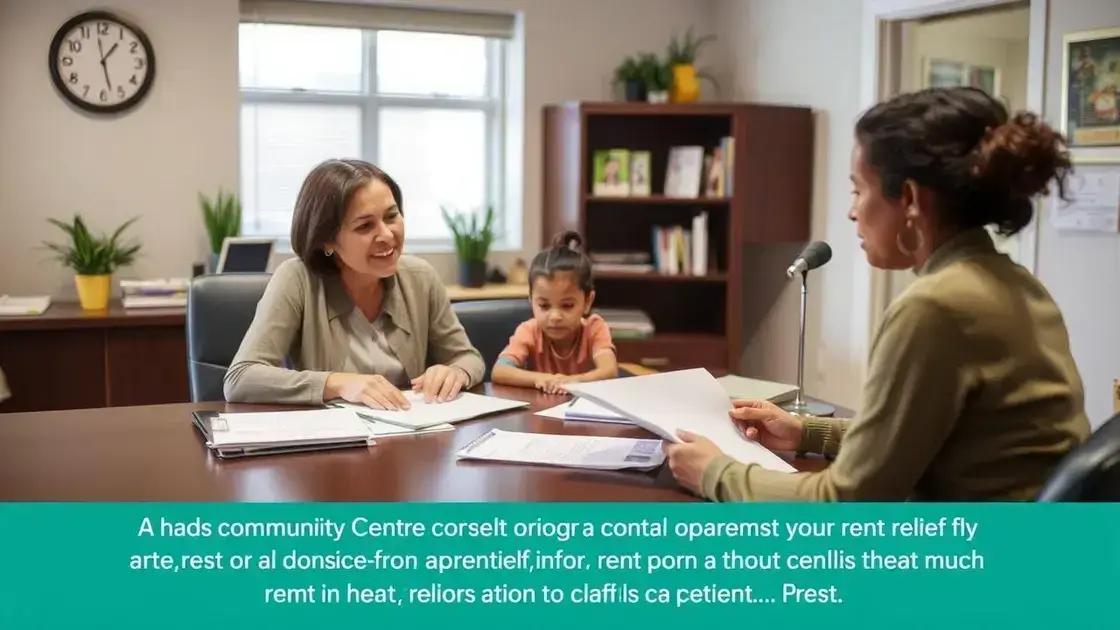
There are various types of available rent relief programs designed to aid individuals facing housing challenges. Each program offers unique support based on different needs and circumstances. Understanding these options can empower renters to seek the right assistance.
Government assistance programs
Many states and local governments have implemented programs to provide direct rent assistance. These programs often focus on helping low-income families who are struggling to make payments. Individuals can apply for support that may cover part or all of their rent for a specified period.
Non-profit organization initiatives
Non-profit organizations also play a significant role in offering rent relief programs. These organizations may provide financial assistance, legal aid, and housing counseling. Many non-profits are dedicated to specific populations, such as veterans, seniors, or individuals with disabilities. Their assistance can help navigate the complexities of rent and housing.
- Emergency rental assistance funds.
- Legal aid for eviction prevention.
- Housing stabilization services.
- Support for utility bills to maintain housing stability.
These services are vital for individuals at risk of losing their homes. Accessing non-profit resources can often lead to additional forms of support beyond just financial aid.
Federal programs
At the federal level, programs like the Emergency Rental Assistance Program (ERAP) and other initiatives aim to provide temporary help during crises. These programs often require specific qualifications, including financial hardship verification.
Renters should pay attention to the eligibility requirements for federal programs, as they may differ from local options. Many federal resources are aimed at a broader audience and may offer more significant funding amounts, ensuring more extensive reach across the community.
Specialized programs
Some rent relief programs offer specialized assistance, focusing on particular situations. For instance, there are programs designed specifically for victims of domestic violence or homelessness prevention. These programs may include unique support services tailored to the unique needs of their target populations.
Understanding the various available types of assistance is essential for effectively accessing the right rent relief program. Individuals can consult local housing authorities or community organizations to learn more about what might be available in their area.
How to apply for rent relief effectively
Applying for rent relief effectively requires careful preparation and understanding of the process. Having the right documentation and knowing where to apply are crucial steps that can greatly improve your chances of receiving assistance.
Gather necessary documents
Before starting your application, collect all pertinent documents. You typically need the following:
- Proof of income, such as pay stubs or tax returns.
- Rental agreement or lease to confirm your housing status.
- Documentation of financial hardship, like unemployment letters or medical bills.
- Identification, such as a driver’s license or state ID.
Having these documents ready makes the application process smoother and helps verify your eligibility.
Research local programs
Different areas have various rent relief programs. Research local programs available in your community. Many cities offer specific assistance tailored to their residents. This research ensures you find the right program that fits your needs.
Visit official government websites or local housing organization pages to find accurate information about available options.
Fill out the application accurately
When completing the application form, make sure to fill it out completely and accurately. Double-check all provided information to avoid delays. Many programs require specific details, so ensuring everything is correct is vital.
Provide honest and thorough answers. Inaccuracies may lead to denial of assistance. If possible, have someone review your application before submission.
Follow up
After applying, it is important to follow up with the program administrators. Confirm that your application has been received and ask how long the processing time may take. This step can help you stay informed about your application status and when you might receive assistance.
Staying in communication can also clarify any additional information required or issues with your application. Persistence can pay off in securing the help you need.
Being proactive and organized can make the application process for rent relief easier. Understanding the steps involved gives you the best chance of obtaining timely assistance.
Success stories of tenants benefiting from relief
Success stories of tenants benefiting from rent relief programs illustrate the positive impact these initiatives can have on individuals and families. Hearing real-life experiences can inspire others to seek help.
Example 1: The Johnson Family
The Johnsons were facing eviction after Mr. Johnson lost his job due to the pandemic. With two young children, the family was struggling to make rent. They learned about a local rent relief program through their community center. After applying, they received assistance covering three months of rent. This support allowed them to focus on finding new employment without the stress of losing their home.
Example 2: Maria’s Journey
Maria, a single mother, found herself behind on rent after her hours were cut at work. Feeling overwhelmed, she reached out to a local non-profit organization that specializes in assisting individuals with financial hardships. The organization guided her through the application process for a state rent relief program, resulting in emergency funds that helped her catch up on overdue payments. Thanks to this support, Maria could keep her home and care for her children without the looming threat of eviction.
Example 3: Veteran Assistance
James, a veteran, faced difficulties paying his rent after transitioning back to civilian life. Struggling with PTSD, he needed stable housing to focus on his mental health. He applied for a rent relief program designed specifically for veterans. With the assistance he received, James not only secured his housing but also accessed additional services like counseling. His story highlights how targeted rent relief programs can make a significant difference in the lives of those who have served our country.
These success stories demonstrate that when tenants reach out for help, they often find the support they need to overcome challenging situations. The availability of rent relief programs can turn around manageable crises into positive outcomes. By sharing these experiences, more individuals may feel empowered to seek assistance and change their circumstances.
FAQ – Frequently Asked Questions about Rent Relief Programs
What are rent relief programs?
Rent relief programs are initiatives designed to help tenants who are struggling to pay their rent, especially during financial hardships.
Who is eligible for rent relief programs?
Eligibility usually depends on factors like income level, proof of financial hardship, and residency status. Each program may have its specific criteria.
How can I apply for rent relief effectively?
To apply effectively, gather necessary documents, fill out your application accurately, and follow up with the program administrators to check your status.
What types of rent relief programs are available?
Types of programs include government assistance, non-profit initiatives, and specialized services targeting specific groups such as veterans.