A student loan cancellation plan allows eligible borrowers to have a portion or all of their student loans forgiven, providing significant financial relief, especially for those with low incomes or in public service jobs.
Have you heard about the student loan cancellation plan and how it might change your financial future? Many are curious about these initiatives, so let’s dive into the details and what you need to know.
Understanding the student loan cancellation plan
Understanding the student loan cancellation plan is essential for anyone burdened by student debt. In recent years, various initiatives have aimed to alleviate this pressure on borrowers.
What is the Student Loan Cancellation Plan?
The student loan cancellation plan refers to government policies designed to reduce or eliminate education debt for qualifying borrowers. These programs vary in structure, targeting different groups of individuals based on their circumstances.
Who Qualifies for Cancellation?
Eligibility for the cancellation can differ depending on the specific plan in question. Generally, here are a few factors that often determine your qualification:
- Type of loan: Federal loans are usually the focus, especially Direct Loans.
- Income level: Some plans are geared towards low to moderate-income borrowers.
- Employment: Working in public service can sometimes lead to cancellation opportunities.
It’s crucial to check whether your loan qualifies and what requirements exist.
The Benefits of Student Loan Cancellation
A major advantage of these plans is the potential relief they offer to individuals struggling with debt. Reducing or eliminating your debt allows you to invest in your future more freely.
Without the heavy weight of student loans, you may find it easier to:
- Save for emergencies or retirement.
- Purchase a home or a vehicle.
- Pursue further education or training.
Understanding the details of the student loan cancellation plan is vital. It not only helps you navigate your options but also empowers you to take control of your financial future. Getting informed and seeking assistance can make a significant difference in your journey towards a debt-free life.
Eligibility criteria for cancellation
Finding out the eligibility criteria for cancellation is a key step for borrowers seeking relief under student loan cancellation plans. Different programs have distinct requirements based on a variety of factors.
Types of Loans
Not every loan qualifies for cancellation. Generally, federal student loans are prioritized in these programs. Understanding which type of loan you have is crucial.
Income Level
Your income is often a determining factor in your eligibility for cancellation. Many plans aim to assist those with low to moderate incomes, ensuring that support reaches those who need it most.
Employment Status
Another important aspect is your employment. Certain professions, especially those in public service, may offer additional benefits related to loan cancellation. If you work in these fields, you could unlock more favorable terms.
- Teaching in low-income schools can often qualify you.
- Healthcare workers in underserved areas may also get benefits.
- Non-profit employees can sometimes take advantage of cancellation programs.
While the eligibility criteria can vary, it’s essential to review your personal situation closely. Make sure to gather all necessary documentation and verify what applies to your case.
Staying informed about the requirements will strengthen your application. Researching your loan type and understanding your financial situation will help you know whether you qualify for student loan cancellation.
Step-by-step guide to apply for cancellation
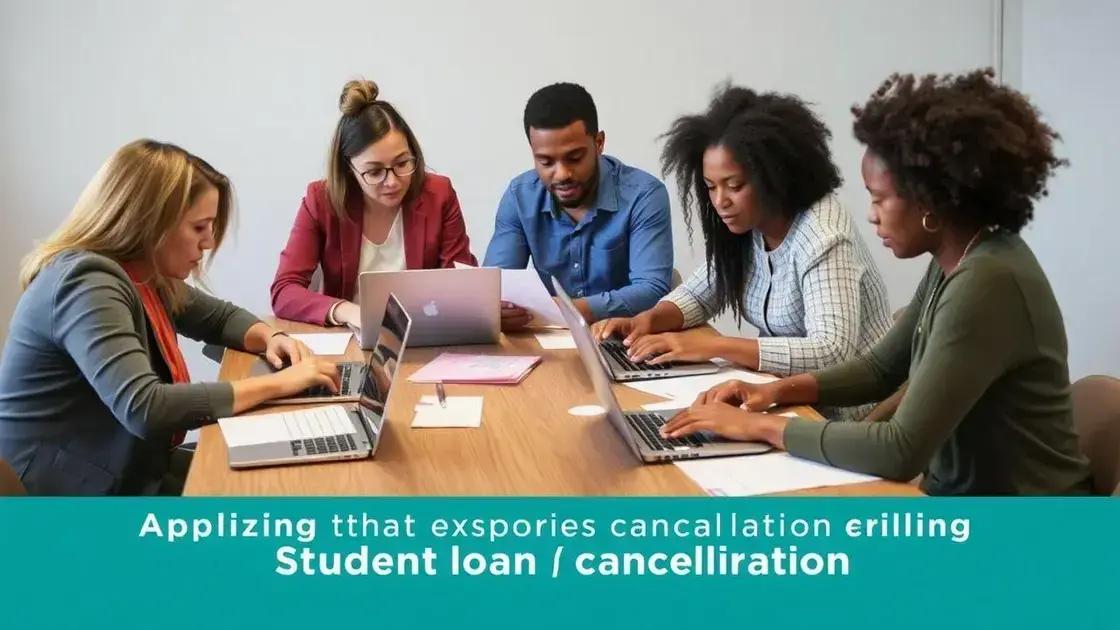
Applying for a student loan cancellation can seem daunting, but breaking it down into steps can make the process easier. Knowing what to do at each stage helps ensure you don’t miss any crucial information.
Step 1: Gather Necessary Documents
The first step in your application is to collect all required documents. You may need:
- Your loan account information.
- Proof of income to demonstrate eligibility.
- Details of your employment, particularly if you work in public service.
Having these documents ready will streamline your application process.
Step 2: Check Your Eligibility
Before applying, verify that you meet all criteria for the cancellation program you are interested in. Every program has its unique guidelines, so spending time understanding these will help you avoid mistakes in your application.
Step 3: Complete the Application
Once you are organized, it’s time to fill out the application form. You can usually find the necessary form on your loan servicer’s website. Be sure to fill it out completely, as omissions can lead to delays. Double-check all entries for accuracy!
Step 4: Submit Your Application
After completing the application, submit it according to the instructions provided. Many borrowers choose to send the application electronically for speed. Make sure to keep a copy for your records.
Step 5: Follow Up
Lastly, it’s important to follow up after submitting your application. Keep an eye on your email or account for any updates. If you do not hear back within a reasonable time frame, consider reaching out to the loan servicer to inquire about your application status.
By following these steps, you can navigate the process of applying for student loan cancellation more effectively. Each step is crucial, so take your time and ensure that you meet all the requirements.
Impact of cancellation on your credit score
The impact of cancellation on your credit score is an important consideration as you navigate student loan cancellation options. Understanding how these changes affect your credit is vital for your financial health.
How Canceling Loans Affects Credit
When a loan is canceled, it typically improves your credit score. This is because your overall debt burden decreases, which can be beneficial for your credit utilization ratio. Lower debt usually leads to a better credit score as lenders often look favorably on reduced liabilities.
Potential Negative Aspects
Despite the positive effects, there can be negative aspects too. In some cases, canceled loans may remain on your credit report as “settled” or “paid” rather than “fully satisfied.” This can lead to confusion for future lenders.
Benefits of Improved Credit Score
As your credit score improves from loan cancellation, you may experience several benefits:
- Increased chances of loan approval in the future.
- Better interest rates on new loans or credit cards.
- Higher credit limits from financial institutions.
Keeping an eye on your credit report after cancellation is crucial. Regularly checking your score will help ensure that everything reflects accurately and that no negative marks persist.
Overall, the overall impact of student loan cancellation on your credit score is generally positive, as long as you manage your finances well afterwards. Remember to seek advice if you have concerns regarding how cancellation may influence your financial future.
Alternatives to student loan cancellation
Looking for alternatives to student loan cancellation can be an important step for borrowers who do not qualify for cancellation programs. While cancellation can offer a fresh start, other options may also provide relief from student debt.
Income-Driven Repayment Plans
One popular alternative is the income-driven repayment plan. These plans adjust your monthly payments based on your income and family size. This can make payments more manageable, especially for those with lower incomes.
Loan Forgiveness Programs
If you work in certain fields, you may qualify for loan forgiveness through specialized programs. Here are a few examples:
- Public Service Loan Forgiveness: Service workers in government or non-profit jobs can have their loans forgiven after making qualifying payments.
- Teacher Loan Forgiveness: Teachers in low-income schools can also apply for forgiveness after a set number of years.
- Loan Repayment Assistance Programs: Some employers offer assistance with loan repayment as an employee benefit.
Refinancing Your Loans
Another option is refinancing your student loans. This process involves taking out a new loan with a lower interest rate to pay off your existing loans. Lower rates can help reduce your monthly payments and total interest paid over time. However, this option may come with risks, especially if you lose federal protections associated with your current loans.
Applying for Hardship Deferrals
If you’re facing financial difficulty, you might also consider applying for a hardship deferral or forbearance. This allows you to temporarily pause your payments without penalties. While this won’t erase your debt, it can provide immediate relief until you’re able to resume payments.
Exploring these alternatives to student loan cancellation can help you find a path that fits your financial situation. Always consider talking to a financial advisor for personalized guidance and support.
In conclusion, navigating the world of student loans can be challenging, but options like student loan cancellation, alternatives like income-driven repayment plans and refinancing, can make a significant difference. Understanding the eligibility criteria is crucial, as is knowing how cancellation impacts your credit score. Take the time to explore all your options and select the best path for your financial future. Stay informed, stay proactive, and don’t hesitate to seek help when needed!
FAQ – Frequently Asked Questions about Student Loan Cancellation
What is a student loan cancellation plan?
A student loan cancellation plan is a program that allows borrowers to have part or all of their loans forgiven under specific conditions.
Who qualifies for student loan cancellation?
Eligibility varies but often includes federal loan borrowers, those with lower incomes, or individuals working in public service roles.
How does student loan cancellation affect my credit score?
Generally, canceling a loan can improve your credit score by reducing your overall debt load, but it may leave marks on your credit report.
What are some alternatives to student loan cancellation?
Alternatives include income-driven repayment plans, loan forgiveness programs through employment, refinancing options, and hardship deferrals.