Student debt relief updates include new forgiveness programs, adjusted eligibility criteria, lower interest rates, and innovative repayment plans aimed at easing financial burdens for borrowers and making education more accessible.
Student debt relief updates are crucial for millions facing the burden of loans. Navigating these changes can feel overwhelming, but staying informed is essential. Let’s delve into what you need to know about the latest developments.
Recent changes in student debt policies
Recent changes in student debt policies have created significant waves in financial planning for many borrowers. Understanding these changes is crucial to navigate your options effectively. Understanding your rights under the new guidelines can help you make informed decisions about your loans.
New Loan Forgiveness Programs
One of the most notable changes involves the introduction of new loan forgiveness programs aimed at specific groups, such as teachers and public service workers. These programs allow for more accessible paths to debt relief based on service commitments.
Interest Rate Adjustments
Additionally, recent reforms have adjusted interest rates for federal loans. Lowering these rates can save borrowers a considerable amount over the life of their loans. This also emphasizes the importance of understanding how your interest rate directly impacts your total repayment amount.
- Loan forgiveness eligibility for teachers and healthcare workers
- Alterations in application processes to simplify access
- Streamlined eligibility requirements for consolidating loans
Moreover, many borrowers may now qualify for income-driven repayment plans. These plans adjust monthly payments based on income, making repayment more manageable for those earning lower salaries.
Future Policy Directions
Looking ahead, further updates to these policies are likely to occur, intended to provide improved support for borrowers. Monitoring the latest announcements from the Department of Education can ensure that you remain informed about any new opportunities for debt relief or changes to existing policies. It’s essential to be proactive, as understanding these updates can significantly affect your financial outcomes.
From loan forgiveness options to interest rate revisions, the recent changes in student debt policies hold promising potential to alter the landscape for many borrowers. As these reforms unfold, staying engaged and informed will empower you to make decisions that best suit your financial situation.
Eligibility criteria for student debt relief
Understanding the eligibility criteria for student debt relief is essential for anyone navigating student loans. These criteria determine who can take advantage of relief programs and how to apply for them. It’s important to know what you need to qualify.
General Eligibility Requirements
Firstly, most relief programs require borrowers to demonstrate a financial need. This includes income limits that ensure assistance goes to those who need it most. Additionally, eligible loans typically include federal loans but may exclude private loans.
Specific Programs and Their Criteria
Different relief programs have unique requirements, so it’s crucial to check the specifics:
- Public Service Loan Forgiveness (PSLF): To qualify, you must work in a qualifying public service job and make 120 consecutive payments.
- Income-Driven Repayment (IDR): Eligibility is based on your income and family size, which adjusts your monthly payment.
- Teacher Loan Forgiveness: Teachers in low-income schools may qualify for forgiveness after five years of service.
Additionally, many programs now include provisions for borrowers with disabilities or those facing financial hardships due to unforeseen circumstances. Keeping abreast of updates from the Department of Education is vital, as eligibility requirements can change.
Monitoring your loan servicer and understanding the criteria for each relief option ensures you don’t miss out on opportunities for debt relief that could significantly ease your financial burden.
Application process for debt forgiveness
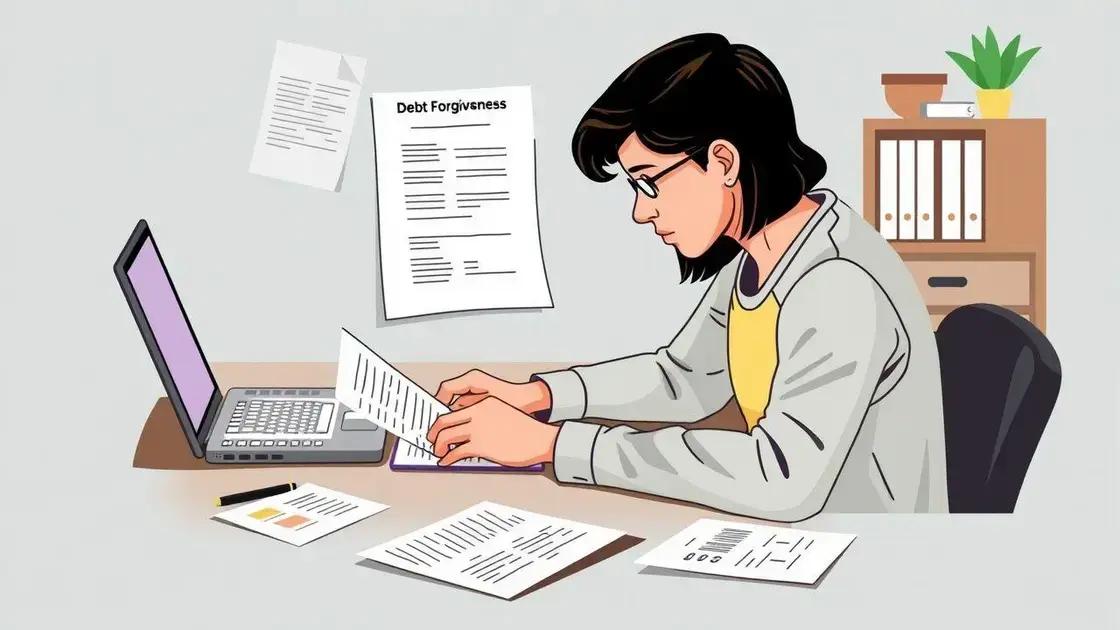
The application process for debt forgiveness can seem complicated, but understanding the steps can make it easier. Knowing what documents you need and how to submit them is crucial for successful applications.
Gather Necessary Documentation
First, collect all relevant documents. You’ll need your loan information, proof of income, and any employment verification if you’re applying for programs like Public Service Loan Forgiveness. Having everything ready makes the process smoother.
Complete the Application Form
Most forgiveness programs require you to fill out specific application forms. Be sure to read the instructions carefully, as each program may have different requirements. Take your time to provide accurate information to avoid delays.
- Double-check your eligibility before applying.
- Ensure all documents are current and accurate.
- Follow up if you haven’t received confirmation of your application.
Once your application is submitted, it’s essential to stay engaged with your loan servicer. They can provide updates on your application status and let you know if any further documentation is necessary. While waiting for approval, consider reviewing your financial situation and future borrowing needs.
Overall, the key to navigating the debt forgiveness application process lies in preparation and persistence. Being organized and proactive will help you take full advantage of the relief options available to you.
Impacts of student debt relief on borrowers
The impacts of student debt relief on borrowers are significant, shaping their financial futures and personal lives. When relief is granted, it can reduce monthly payments and enable borrowers to focus on other important areas, like saving for a home or investing in their careers.
Financial Freedom
One major benefit is the increased financial freedom that comes with reduced debt. Borrowers can allocate funds toward essential expenses rather than just loan payments. This can lead to less stress and improved overall well-being.
Boosting Economic Opportunities
In addition to personal benefits, student debt relief can boost economic opportunities. When individuals have more disposable income, they are more likely to invest in businesses, which can lead to job creation and a stronger economy.
- Ability to purchase homes sooner.
- Increased spending on education or further training.
- More disposable income for lifestyle choices.
Moreover, relieved borrowers often feel more empowered to pursue their passions and take risks, such as starting a new business or exploring new career paths that they otherwise may have avoided due to the burden of debt.
However, it’s important to recognize that the impacts can vary greatly depending on individual circumstances. Some borrowers may still face financial challenges even after receiving relief, especially if they have accrued additional debt or if their living expenses have significantly increased.
Future prospects for student loan reform
The future prospects for student loan reform are an important topic as many borrowers look for better solutions to manage their debt. Ongoing discussions among policymakers suggest that changes may be on the horizon, aimed at creating a fairer system for all students.
Potential Legislative Changes
Legislators are increasingly focused on reforming the current student loan system. Proposals range from interest rate reductions to expanded eligibility for loan forgiveness programs. These changes seek to ease the financial burden on borrowers and ensure that higher education remains accessible.
Innovative Repayment Plans
In addition to legislation, new repayment plans are being considered. These plans could be tied directly to borrowers’ incomes to make monthly payments more manageable.
- Income-driven repayment options could expand to more borrowers.
- Shorter loan repayment timelines might be introduced.
- Streamlined application processes for forgiveness programs could reduce confusion.
Furthermore, there is a growing emphasis on providing resources and support for financial literacy. Educating borrowers on their options will empower them to make informed choices. Understanding the intricacies of loans and repayment plans can lead to better financial decisions.
Many advocates are pushing for changes that would address the root causes of student debt, such as rising tuition costs. They believe that tackling these issues directly will be crucial for meaningful reform. The conversation around reducing the cost of education is as important as reforming the loan repayment system.
In conclusion, staying informed about the ever-evolving landscape of student debt relief is essential for borrowers. The future prospects for student loan reform offer hope for better options and greater accessibility. As policies change and new repayment plans emerge, it’s crucial for borrowers to understand their options. This awareness will empower them to make informed decisions, ultimately leading to a brighter financial future. Together, we can advocate for a more equitable student loan system that supports the aspirations of all individuals.
FAQ – Student Debt Relief and Loan Reform
What is the Public Service Loan Forgiveness program?
The Public Service Loan Forgiveness program allows borrowers working in qualifying public service jobs to have their federal loans forgiven after making 120 qualifying monthly payments.
How can I check my eligibility for student debt relief?
You can check your eligibility by reviewing the requirements of various relief programs on the Department of Education’s website or contacting your loan servicer directly.
What types of loans are eligible for relief?
Most federal loans, such as Direct Subsidized Loans, Direct Unsubsidized Loans, and Direct PLUS Loans, are eligible for various relief and forgiveness programs. Private loans typically do not qualify.
How will future reforms impact borrowers?
Future reforms aim to simplify repayment options, potentially lower interest rates, and expand eligibility for forgiveness, ultimately providing more support to borrowers in managing their debts.
