Utility bill help for low-income families includes government assistance programs, local community resources, and practical strategies for reducing energy costs, which can significantly ease financial burdens.
Utility bill help for low-income families is a pressing concern that many face today. If you’ve ever wondered how to manage rising costs, you’re not alone. In this article, we’ll discuss support options that could ease your burden.
Understanding utility bills and assistance programs
Understanding utility bills is essential for low-income families facing financial difficulties. These monthly statements can often be confusing, but knowing how to read them is the first step toward seeking assistance.
A utility bill typically breaks down the services you receive, such as electricity, water, and gas. Each service will show the amount consumed and the corresponding charge. This information helps you identify your usage patterns, which can inform your efforts to reduce costs.
Key Components of Utility Bills
Utility bills include several important elements:
- Account number: Your unique identifier in the utility company system.
- Billing period: The time frame during which the services were used.
- Usage details: Amount of energy or water consumed, usually represented in kilowatt-hours (kWh) or gallons.
- Total amount due: The total charges for the billing period, including any taxes or fees.
Familiarizing yourself with these components can make it easier to spot discrepancies or understand your consumption trends. Furthermore, many utility companies offer payment assistance programs specifically designed to help low-income families.
Types of Assistance Programs
There are various assistance programs that can help alleviate the burden of high utility costs:
- Government-Subsidized Programs: Many states offer programs funded by federal assistance to help pay your utility bills.
- Local Community Resources: Non-profit organizations may provide temporary assistance and support.
- Payment Plans: Some utility companies allow for flexible payment options to spread out costs over time.
- Weatherization Programs: These programs help improve your home’s energy efficiency, thus lowering future bills.
By reaching out to your utility provider, you can learn about the specific programs available in your area. It’s also helpful to gather any required documentation, such as income verification, to expedite the application process.
Finding the right kind of assistance can significantly ease the burden on low-income families. Always take time to explore your options, as there could be solutions tailored to your unique situation.
Government programs for low-income families
Government programs for low-income families provide essential support to help manage expenses, especially for utility bills. These initiatives aim to alleviate financial strain and ensure families have access to critical services.
Many states offer programs funded by federal government assistance. Each program may have different eligibility requirements based on income levels and household size. It’s important to research what options are available in your area.
Types of Government Assistance Programs
Some common types of government programs that can help with utility bills include:
- Low-Income Home Energy Assistance Program (LIHEAP): This program helps eligible families pay for their heating or cooling costs, preventing service disconnections during extreme weather.
- Supplemental Nutrition Assistance Program (SNAP): While primarily focused on food assistance, SNAP can help free up funds in your budget, enabling you to allocate more money towards utilities.
- Temporary Assistance for Needy Families (TANF): TANF provides financial aid and support services to families in need, which can indirectly help with utility bills.
- Energy Efficiency Programs: Many local governments offer programs that help low-income households make energy-efficient upgrades, reducing their overall utility costs.
Applying for government programs can seem daunting, but the benefits can be significant. Start by gathering necessary documents like proof of income and identification. Most programs have straightforward application processes, often available online or through local agencies.
It’s also beneficial to reach out to social services or community organizations that can assist you in navigating these programs. They can provide guidance, answer questions, and even help with completing applications.
Finding the right government assistance can make a huge difference for low-income families. Always take the time to explore all available resources, as every bit of help counts.
Community resources and local assistance
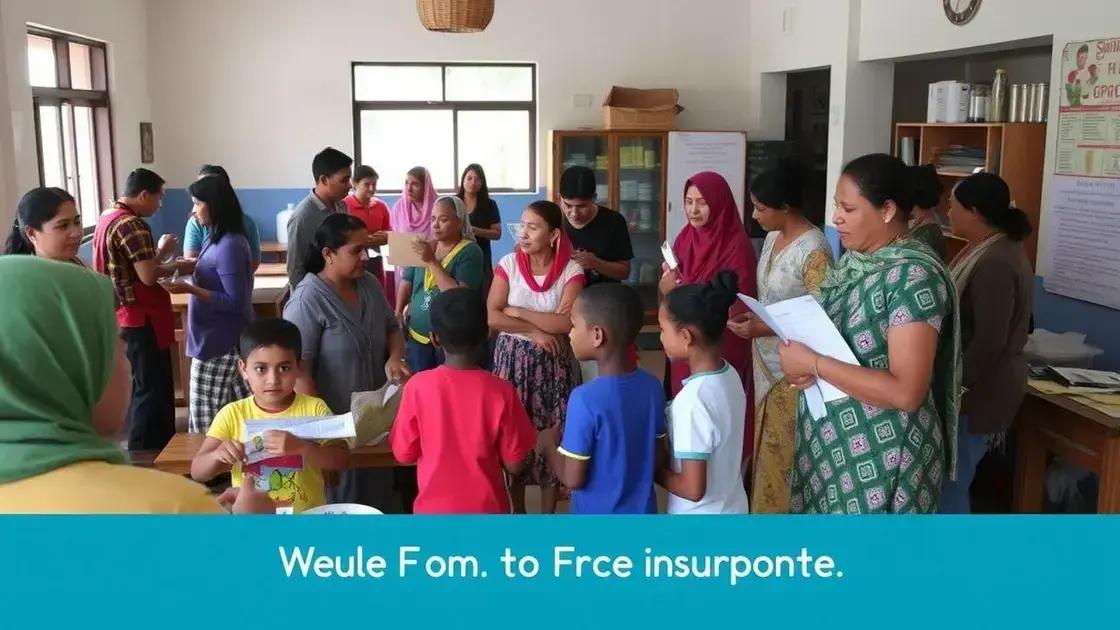
Community resources and local assistance play a vital role in helping low-income families manage their finances and pay their utility bills. Many local organizations provide valuable services that can ease financial burdens.
These resources vary by location but often include food banks, financial counseling, and emergency assistance programs. Knowing where to find help can make a significant difference for families in need.
Types of Community Resources
It’s important to explore the different types of support available:
- Food Pantries: Local food banks can provide essential groceries, allowing families to save money for other expenses, including utilities.
- Local Charities: Organizations such as the Salvation Army or Catholic Charities often offer financial assistance for utility bills or can connect you to other helpful programs.
- Nonprofits: Many nonprofits focus on helping low-income families access resources, from job training to financial education.
- Community Action Agencies: These agencies provide a variety of services, including direct utility assistance and referrals to additional resources.
Connecting with these organizations is a simple process. You can often find information online or by visiting local community centers. Many programs are designed to be accessible, putting help within reach of those who need it most.
Additionally, local governments may partner with nonprofits to create programs that directly address utility payment concerns. Make sure to ask about any available resources or assistance when you contact these organizations.
Utilizing community resources can empower families to take control of their financial situations. Remember, reaching out for help is a sign of strength, and many people in your community are willing to lend a hand.
Strategies to effectively reduce utility costs
Reducing utility costs is crucial for low-income families looking to save money. By adopting a few simple strategies, households can manage expenses more effectively and keep their bills under control.
There are many actionable steps families can take to help reduce their utility expenses. These can involve changes in daily habits and utilizing resources available to them.
Practical Strategies for Savings
Here are some effective strategies to consider:
- Energy-efficient appliances: Using appliances that are rated for efficiency can lead to significant savings on energy costs. Look for the ENERGY STAR label when purchasing new devices.
- Adjust thermostat settings: Setting the thermostat slightly lower in the winter and a bit higher in the summer can save energy. Even a degree or two can make a difference.
- Seal leaks: Check for drafts around windows and doors. Sealing these leaks can prevent heat loss and reduce heating and cooling costs.
- Practice mindful usage: Being aware of energy usage, such as turning off lights when leaving a room and unplugging devices when not in use, can lead to lower bills.
These small adjustments can accumulate over time, leading to noticeable savings. Additionally, families should take advantage of local programs that offer free energy audits, which assess energy use in the home and suggest changes for improvement.
Involving the whole family in these efforts can also be beneficial. Teach children about the importance of conserving energy and making wise choices regarding utility usage. This not only saves money but also promotes responsible habits that can last a lifetime.
By implementing these strategies and being proactive, families can manage their utility costs more effectively and create a stable financial environment.
Tips for applying for utility bill help
Applying for assistance with your utility bills can be a straightforward process if you know the right steps to take. Many programs are available to help low-income families manage their expenses, but gathering the necessary information is essential.
When preparing to apply, it helps to have a clear understanding of what is required. Each program may have different eligibility criteria and documentation needs, but there are some general tips that can guide you through the process.
Essential Tips for Your Application
Here are some important tips to consider:
- Gather documentation: Before you apply, collect necessary documents such as proof of income, identification, and any recent utility bills. Having these ready can speed up the application process.
- Research available programs: Look for local and state assistance programs. Websites of government agencies often provide detailed information on how to apply and the types of help available.
- Contact local agencies: Reach out to community organizations or local utility companies. They can provide guidance and may help you complete the application.
- Be honest and thorough: When filling out applications, ensure all information is accurate. Incomplete or incorrect details may delay your request for assistance.
Additionally, being proactive can make a significant difference. If you notice that your utility bills are becoming unmanageable, don’t wait until they are overdue. Applying for help before a disconnection occurs can provide more options and relief.
Many programs also allow phone applications, which can be helpful for those who may have trouble accessing online forms. Make sure to follow up after submitting your application to confirm its status.
By taking these steps and being prepared, families can successfully navigate the application process and access the support they need to manage their utility costs.
FAQ – Frequently Asked Questions about Utility Bill Help for Low-Income Families
What types of assistance programs are available for utility bills?
There are several programs such as LIHEAP, SNAP, and local community resources that can help low-income families with utility costs.
How do I apply for utility bill assistance?
To apply, gather necessary documentation like proof of income and identification, then research local programs to understand their application process.
Can I get help with past due utility bills?
Yes, many programs offer support for past due bills, but it’s important to apply as soon as possible to avoid disconnection.
Are there strategies to reduce my utility bills?
Yes, practices like using energy-efficient appliances, sealing leaks, and adjusting your thermostat can significantly lower your utility costs.