The WIC sign-up process is straightforward, requiring proof of identity, residency, and income, and provides families with access to nutritious food, nutritional education, and healthcare referrals for better health outcomes.
WIC sign-up steps are essential for families wanting to take advantage of this beneficial program. If you’re unsure where to start, don’t worry! This guide will walk you through the process with ease.
Understanding the WIC program
Understanding the WIC program is crucial for families looking to receive nutritional support. This initiative, funded by the government, provides essential benefits to low-income pregnant, postpartum, and breastfeeding women, along with infants and children up to five years old.
At its core, the goal of the WIC program is to ensure that eligible families have access to healthy foods, nutrition education, and support services. By participating, families can improve their overall well-being and enhance the health of their children.
What Does WIC Offer?
The WIC program offers a variety of services and benefits:
- Healthy food options: Participants receive checks or vouchers to buy specific nutritious foods.
- Nutritional education: WIC provides free classes and resources on healthy eating and meal planning.
- Healthcare referrals: Families can be guided to local health services for additional support.
For many families, understanding the details of the program can significantly impact their lives. It’s about more than just food; it’s about creating a healthy environment for children to grow. The program encourages families to visit local WIC offices, where they can learn more and ask questions directly from knowledgeable staff members.
How WIC Helps Families
The benefits of the WIC program extend beyond nutritional support. Many families find that with the right resources and information, they can make healthier choices. This empowerment not only benefits parents but also leads to healthier growth and development for children.
Additionally, WIC focuses on building strong communities. By fostering connections between families and local healthcare providers, the program promotes a supportive network aimed at improving public health standards. Understanding the WIC program can thus be a step toward better overall health for many.
Eligibility requirements for WIC
Eligibility requirements for WIC ensure that the program supports those in genuine need. To participate, an applicant must meet certain criteria, which helps target those who benefit most from this assistance.
One of the primary conditions is income. Families must have a gross income at or below 185% of the federal poverty level. This number changes annually, so checking the current guidelines is essential. Additionally, applicants should be residents of the state where they apply, allowing access to local benefits.
Categorical Eligibility
Applicants must belong to specific categories to qualify for the program:
- Pregnant women: This includes those who are currently pregnant or up to six months postpartum.
- Postpartum women: Women who have recently given birth, typically within six months, can benefit from WIC.
- Breastfeeding women: Nursing mothers can receive support until their child reaches one year of age.
- Infants and children: Kids up to five years old who meet the program criteria are eligible.
Additionally, applicants are required to provide proof of identity and residency. This can include a driver’s license, a utility bill, or other official documents showing where they live. Meeting these eligibility requirements opens pathways for essential nutrition support, empowering families to make healthier choices.
Furthermore, WIC defines its assistance based on nutritional need, assessed through health screenings. Participating families receive tailored support that positively impacts their health outcomes. The WIC program is dedicated to improving community health by focusing on those who are eligible and need help the most.
Step-by-step sign-up process
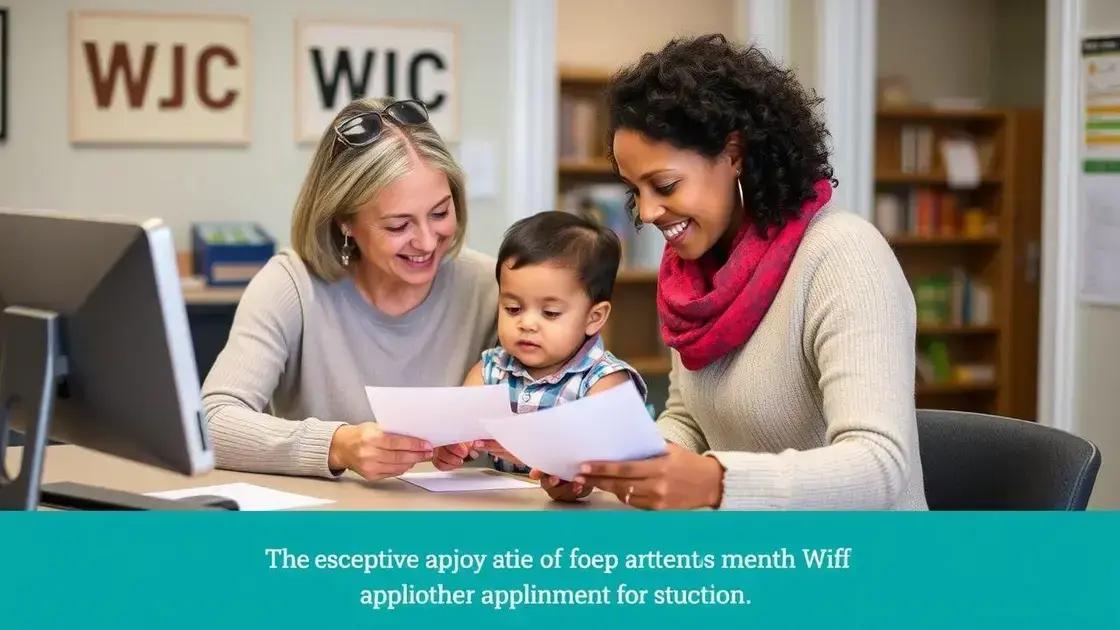
The step-by-step sign-up process for WIC is designed to be clear and straightforward, making it easier for families to access necessary services. Following these steps will help ensure that you complete the application successfully.
First, gather all necessary documents. These typically include proof of identity, residency, and income. Having these documents ready will speed up the process. Commonly accepted documents include pay stubs, tax returns, and bills with your name and address.
Visiting the WIC Office
Next, locate your nearest WIC office. You can find this information on the official WIC website or by calling your local health department. When you arrive, you will be greeted by friendly staff ready to assist you. It’s a good idea to make an appointment to reduce waiting time.
Completing the Application
During your visit, you will fill out an application form. This form may ask questions about your household size, income, and health status. Be as honest and accurate as possible, as this information helps determine your eligibility for the program.
- Personal information: Include details like your name, address, and contact information.
- Family details: List all family members who will be receiving benefits.
- Health status: Provide any medical information that may be relevant.
After submitting your application, a health screening may be conducted. This is done to assess nutritional needs, which is a crucial part of the process. Once approved, you will receive benefits, including food vouchers and nutrition education resources.
Finally, keep track of your appointments and stay connected with your WIC office. Regular follow-ups will help you maintain your benefits and stay informed about any changes in the program.
Documents needed for WIC
When applying for WIC, having the correct documents is crucial. These documents help verify your eligibility and ensure that you receive the benefits you need. Gathering them in advance can simplify the sign-up process.
The first set of documents you need is proof of identity. This can include a driver’s license, state ID, or a passport. The goal is to confirm who you are to the WIC office staff. Another important document is proof of residency. You can provide a utility bill, lease agreement, or any official mail that shows your name and address.
Income Verification
Next, you’ll need to prove your income. This is essential for demonstrating that you meet the program’s financial guidelines. You can bring:
- Pay stubs: Recent pay stubs covering a month are usually sufficient.
- Tax documents: Your most recent tax return can serve as a reference for income.
- Benefits statements: If you receive government assistance, documents confirming this can also be useful.
It’s also important to provide information about the family members applying for WIC. You may need to show documents for all members of your household, especially children. This could include birth certificates or social security cards. These documents help the WIC staff assess your child’s eligibility and nutritional needs.
Be sure to make copies of these documents to keep for your own records. Having everything organized will make your visit to the WIC office smoother and more efficient. With the right documents on hand, you’re on your way to receiving essential nutritional support through WIC.
After signing up: What to expect
After signing up for WIC, it’s important to know what to expect in the coming weeks. The program offers various benefits aimed at supporting your family’s nutritional needs. You will receive crucial information about your benefits and how to access them.
Initially, expect to get a WIC card or checks that you can use to purchase specific foods. These foods are designed to provide essential nutrients for you and your children. They usually include items like milk, eggs, cheese, whole grain bread, fruits, and vegetables. It’s advisable to understand which food items are available through WIC as they can vary by state.
Nutritional Counseling
Another key component of the WIC program is nutritional counseling. WIC provides access to professionals who will help you learn about healthy eating habits. You can expect to attend classes or have one-on-one sessions focused on nutrition education. These meetings are designed to empower you with the knowledge to make better food choices.
Follow-Up Appointments
It’s essential to stay on schedule with your follow-up appointments. WIC will set these appointments to review your family’s needs and assess your children’s growth. During these visits, you may also learn about new programs or services that could benefit your family. These follow-ups are an important way to ensure you continue receiving the necessary support.
- Keep your information up-to-date: Notify the WIC office about any changes in income, household size, or contact information.
- Participate in educational activities: Engage in workshops and classes offered by WIC to enhance your nutrition knowledge.
- Utilize health referrals: If you need medical attention, take advantage of the healthcare referrals provided by WIC.
Overall, being active and informed in the WIC program will help maximize your benefits and improve your family’s health. The program not only supports you with food but also equips you with vital resources to foster a healthier lifestyle.
FAQ – Frequently Asked Questions about WIC Program
What is the WIC program?
The WIC program is a federal assistance initiative that provides nutritional support to low-income pregnant women, new mothers, infants, and children under five.
Who is eligible for WIC benefits?
Eligibility for WIC includes being a pregnant or breastfeeding woman, a postpartum woman, or having children under the age of five, along with meeting certain income requirements.
What documents do I need to apply for WIC?
To apply for WIC, you need proof of identity, residency, and income, such as a driver’s license, utility bill, and pay stubs.
What benefits can I expect after signing up for WIC?
After signing up, families can expect access to nutritious foods, nutritional counseling, and healthcare referrals to improve overall health.