To prepare for severe weather, create an emergency plan, build an emergency kit with essentials, stay informed using reliable resources, and practice safety tips specific to various weather conditions.
Today’s US weather warnings play a vital role in keeping you and your loved ones safe. With unpredictable weather patterns, understanding these alerts can significantly impact your day. So, how do these warnings influence your plans?
Understanding weather warnings and alerts
Understanding weather warnings and alerts is essential for anyone living in the United States. These messages keep us informed about severe weather conditions and help us stay safe. Knowing how to interpret these warnings is crucial for making timely and informed decisions.
Types of Weather Warnings
There are several types of weather warnings you may encounter. Each warning carries a specific meaning and urgency.
- Severe Thunderstorm Warning: This indicates that a thunderstorm capable of producing damaging winds, hail, or heavy rain is occurring.
- Tornado Warning: A tornado has been sighted or indicated by radar. Seek shelter immediately.
- Flash Flood Warning: Flash flooding is imminent or occurring. Move to higher ground.
- Winter Storm Warning: Dangerous winter weather is expected that could impede travel and pose threats to life.
Understanding these types helps you act quickly. It’s not just about knowing; it’s about staying safe and prepared. Weather alerts are often issued by the National Weather Service and are communicated through various channels, including radio, television, and mobile apps.
How to Stay Updated
Staying updated on weather warnings is key, especially during severe weather seasons. Here are a few effective ways:
- Subscribe to local weather alerts via text message.
- Follow weather channels on social media.
- Use weather apps on your smartphone that provide real-time updates.
When you receive a warning, pay attention to the details. Knowing the level of severity and recommended actions can be lifesaving. For example, if a tornado warning is issued, it’s essential to find shelter immediately.
Be sure to have an emergency kit ready, which includes essentials like water, food, and a flashlight. Being prepared allows you to respond effectively when the situation arises.
In conclusion, understanding the different types of weather warnings and how to stay informed is vital. By paying attention and being proactive, you can ensure the safety of yourself and others during severe weather events.
Current severe weather warnings across the US
Current severe weather warnings across the US highlight the need for awareness and preparedness. As weather patterns change, knowing where severe weather is occurring helps protect lives and property. Let’s take a closer look at how these warnings are currently impacting various regions.
Across the country, different areas may experience a variety of severe weather events. For instance, the South might be dealing with thunderstorms, while the Midwest could be facing tornado outbreaks. Keeping track of these conditions is essential.
Regional Weather Alerts
Severe weather alerts are issued based on specific regions affected by dangerous conditions.
- East Coast: Heavy rain and flooding warnings are common here, especially during tropical storms.
- Midwest: Tornado and hail warnings are prevalent in spring and summer months.
- West Coast: Wildfires and heat alerts often occur due to dry conditions.
- Southern States: Storms and flash flooding can arise suddenly and require immediate attention.
Each alert provides critical information, such as what kind of weather is expected, when it will occur, and necessary safety measures to take. Understanding the specifics can lead to faster responses and better preparation for individuals and families.
Staying Informed
To stay safe during severe weather warnings, it’s vital to stay informed through reliable sources.
- Check local news channels regularly for updates.
- Utilize weather apps for real-time alerts on your phone.
- Listen to NOAA Weather Radio for the latest information.
Additionally, consider joining local community groups that share important weather updates. Engaging with your neighbors can create a safety network, ensuring everyone is prepared for unexpected severe weather.
In summary, having a clear understanding of the current severe weather warnings across the US allows individuals to take appropriate actions. Regularly monitoring alerts and discussing preparedness with others in your area fosters a proactive approach to dealing with severe weather.
Safety tips for different weather conditions
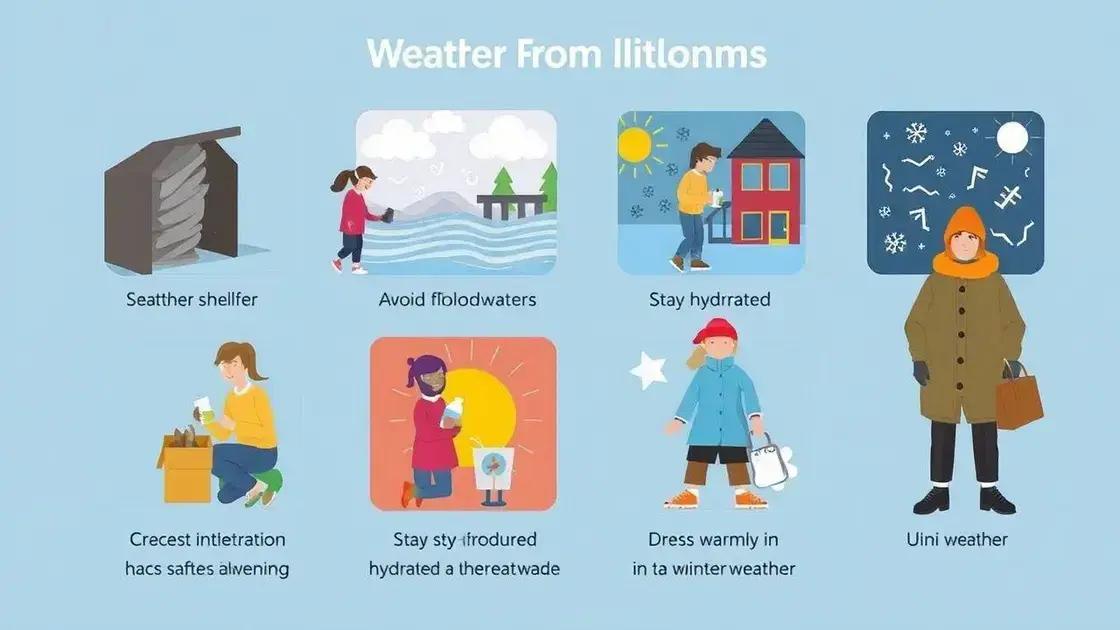
Safety tips for different weather conditions are essential to protect yourself and your loved ones. Each type of severe weather requires a unique approach to safety. Understanding these tips can make a significant difference during challenging conditions.
For instance, during a thunderstorm, stay indoors and avoid using electrical devices. Unplug appliances if possible, to reduce the risk of power surges caused by lightning strikes. It’s also wise to stay away from windows to prevent injury from flying debris.
Tips for Severe Weather
Here are some critical safety tips for various severe weather situations:
- Tornadoes: Seek shelter in a basement or small interior room away from windows. Protect your head and neck with your arms or a sturdy object.
- Flooding: Never walk or drive through flooded areas. Move to higher ground immediately, and keep a supply kit ready with essentials like food and water.
- Heat Waves: Stay hydrated by drinking plenty of water and avoid strenuous outdoor activities during peak heat hours. Use fans or air conditioning to cool down.
- Winter Weather: If you must go outside, dress in layers to stay warm. Keep an emergency kit in your vehicle, including blankets, snacks, and a flashlight.
Additionally, pay attention to weather alerts and forecasts. Having a reliable weather app can help you stay updated on changing conditions. Being proactive allows you to act swiftly when severe weather is imminent. Consider discussing your safety plans with your family members so everyone knows what to do.
Creating an Emergency Plan
Creating an emergency plan can significantly enhance your safety during severe weather. Ensure your family knows how to contact each other in case of separation. Agree on a meeting place that is safe and familiar.
- Practice drills for various weather scenarios, such as tornado drills or evacuation plans.
- Make sure every family member understands the local emergency numbers and how to use them.
- Keep a battery-powered radio to receive updates if you lose power during a storm.
Staying informed and prepared is the best way to protect yourself during severe weather conditions. Following these safety tips can save lives and minimize injuries.
How to prepare for natural disasters
How to prepare for natural disasters is crucial for safety and survival. Planning ahead can save lives and reduce damage to property. Being proactive means knowing what to do before, during, and after a disaster.
Start by creating an emergency plan for your family. This plan should include meeting places, emergency contacts, and communication methods. Make sure everyone knows what to do in an emergency.
Building an Emergency Kit
An emergency kit is essential for any household. This kit should contain:
- Water: At least one gallon per person per day for at least three days.
- Food: A three-day supply of non-perishable food items.
- First Aid Supplies: Bandages, antiseptics, and any prescribed medications.
- Flashlight and Batteries: For visibility during power outages.
Additionally, include basic tools and hygiene items, such as a can opener, wipes, and toilet paper. Keep your kit in a designated location and review its contents regularly to ensure everything is up to date.
Staying Informed
During a natural disaster, staying informed is crucial. Monitor weather alerts and updates from reliable sources, including:
- Local news stations.
- Weather apps on your mobile device.
- Noaa Weather Radio for continuous updates.
Being aware of changing conditions can help you make timely decisions. Rotate responsibilities among family members to ensure everyone knows how to access information and take appropriate action.
In moments of crisis, it is essential to remain calm and follow your emergency plan. Ensure that pets are included in your preparations, and have a plan for their care during emergencies.
Lastly, practice your emergency plan regularly. Conduct drills that involve all family members. This practice helps everyone feel more confident and prepared when the unexpected occurs.
Resources for tracking weather updates
Resources for tracking weather updates are essential to stay informed and prepared for changing conditions. Knowing where to look for reliable information can make a significant difference during severe weather events.
One of the most effective ways to get real-time weather updates is by using mobile apps. Many weather apps offer notifications for severe alerts. Popular choices include The Weather Channel, AccuWeather, and NOAA Weather Radar. These apps provide accurate forecasts and real-time alerts for your specific location.
Online Weather Services
Besides mobile apps, several websites are also great resources for weather tracking.
- National Weather Service (NWS): This government agency provides comprehensive weather information, including current alerts and forecasts.
- Weather.com: An easy-to-navigate site that offers local weather forecasts, radar maps, and news on severe weather.
- AccuWeather.com: Known for long-range forecasts and personalized weather updates based on your location.
Many people also like to follow local meteorologists on social media. They often share timely updates and safety tips during severe weather events. Platforms like Twitter and Facebook can be valuable for quick alerts and updates from trusted sources.
Community Resources
Be sure to check local community websites or apps that offer emergency alerts. Many towns and counties have systems in place to send out notifications for severe weather, road closures, and other emergencies.
- Local News Stations: Tune into your favorite local news station for live weather coverage and updates.
- Emergency Alert System: This federal system broadcasts emergency alerts via radio and television.
- Community Notification Systems: Sign up for alerts through your town or county’s emergency management office.
By utilizing these resources, you’ll be better equipped to respond to severe weather. Always ensure that the information you’re receiving is from a reliable source to avoid confusion during critical times. Keeping several avenues of information open is the best way to stay informed.
In conclusion, being prepared for severe weather is crucial for your safety and well-being. By understanding the different types of weather warnings, following safety tips, and utilizing reliable resources for tracking updates, you can effectively protect yourself and your loved ones. Remember to create an emergency plan and maintain an emergency kit to ensure you are ready when the unexpected occurs. Stay informed, stay safe, and always be proactive about weather preparedness!
FAQ – Frequently Asked Questions about Weather Preparedness
What is an emergency kit, and what should it include?
An emergency kit is a collection of essential supplies to help you survive for at least three days. It should include water, non-perishable food, a flashlight, batteries, and a first aid kit.
How can I stay informed about severe weather?
You can stay informed by using weather apps, following local news stations, and checking the National Weather Service for updates and alerts.
What should I do if a tornado warning is issued?
If a tornado warning is issued, seek shelter immediately in a basement or an interior room away from windows. Protect your head and neck with your arms or a sturdy object.
Why is having an emergency plan important?
Having an emergency plan ensures that you and your family know what to do in case of severe weather. It helps you act quickly and stay safe during emergencies.