Free US vocational programs provide practical training in various fields, offering accessible and affordable education that leads to strong job placement rates for graduates.
Free US vocational programs can open doors to exciting career opportunities. Curious about how they work? Let’s dive into the world of vocational training and discover the paths available.
What are vocational programs?
Vocational programs are specialized training options designed to prepare students for specific careers. They focus on practical skills and knowledge that directly relate to various trades or technical fields. These programs offer a hands-on approach to learning, making them appealing to many students.
In the United States, vocational programs can be found in a myriad of disciplines. Vocational education often leads to certifications, degrees, or diplomas that enhance employability.
Types of Vocational Programs
There are various types of vocational programs, each catering to different career paths. Common fields include healthcare, skilled trades, and technology.
- Healthcare programs (like nursing or dental assisting)
- Trade programs (including plumbing, electrical work, and carpentry)
- Information technology programs (such as cybersecurity and software development)
Additionally, these programs can be offered at community colleges, technical schools, and sometimes even high schools. The flexible nature of vocational programs allows students to choose a schedule that fits their lifestyle, whether they prefer full-time or part-time studies.
Why Choose Vocational Training?
Choosing vocational training can be beneficial for those looking to enter the workforce quickly. The programs typically have a shorter duration compared to traditional college degrees, allowing students to gain skills efficiently.
Many employers value the hands-on experience that students acquire through vocational training. By completing a vocational program, students often feel prepared for real-world challenges in their chosen fields, setting themselves up for success.
Benefits of enrolling in vocational training
Enrolling in vocational training offers numerous benefits that can greatly enhance your career prospects. These programs not only provide practical skills but also connect students directly with industry needs.
One of the key advantages of vocational training is its focus on real-world applications. Students learn hands-on skills that can be immediately applied in the workplace, making them valuable to potential employers.
Cost-Effectiveness
Vocational training is often more affordable than traditional college degrees. Many programs are offered for free or at a low cost, allowing students to gain necessary skills without incurring substantial debt.
- Reduced tuition costs
- Shorter program durations
- Potential for financial aid or scholarships
Additionally, the shorter duration means that students can enter the workforce more quickly. They can start earning sooner than those who pursue a four-year degree, which can be particularly beneficial in today’s job market.
Strong Job Placement Rates
Vocational programs typically boast high job placement rates. Many institutions have partnerships with local businesses, increasing the chances of securing employment after graduation.
Students who participate in internships during their training often find jobs in the same companies where they completed their training. This connection not only helps in building a practical skill set but also enhances networking opportunities.
Moreover, vocational training prepares students for in-demand careers. Fields such as healthcare, technology, and skilled trades are growing, making trained individuals highly sought after.
Top free vocational programs in the US
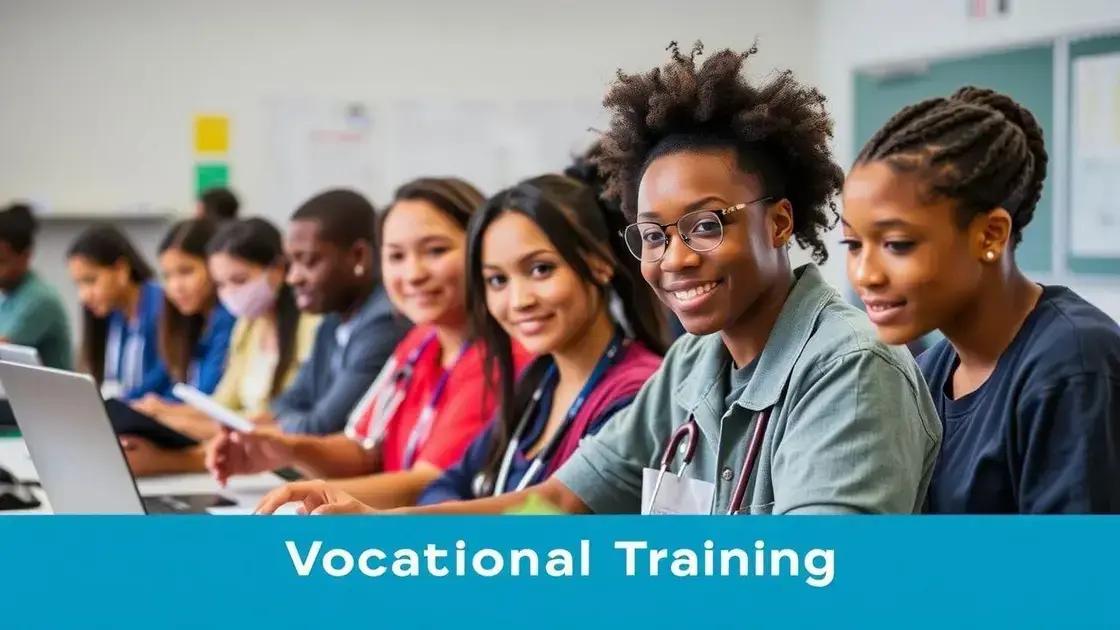
There are many top free vocational programs in the US that can provide valuable skills for students. These programs offer training in various fields, ensuring that participants are ready for the job market.
One major benefit of these programs is the accessibility they provide. Since they are often offered at no cost, they can help students avoid debt while gaining essential skills.
Healthcare Programs
Healthcare vocational programs are among the most sought after. Many community colleges and technical schools offer free training in fields such as nursing, medical assisting, and pharmacy technology.
- Nursing programs that prepare students for their certification exams
- Medical assistant training focusing on administrative and clinical tasks
- Pharmacy technician programs teaching students about medications and dispensing
These programs often include hands-on experience through clinical placements, which are crucial for gaining real-world knowledge.
Skilled Trades Programs
Skilled trades are another area where free vocational programs shine. These courses prepare students for careers in plumbing, electrical work, carpentry, and more.
Students can develop practical skills while learning about safety standards and regulations specific to their trade. By enrolling in these programs, they increase their employability in high-demand areas.
Technology Programs
Technology-focused vocational programs are also growing in popularity. Students can find free coding bootcamps, cybersecurity courses, and IT support training.
These programs provide students with valuable skills that are essential for today’s job market. Many institutions partner with tech companies to help students secure internships, further enhancing their job prospects.
How to apply for vocational programs
Applying for vocational programs can be a straightforward process if you follow key steps. Understanding how to navigate this process can help you secure a spot in the program of your choice.
First, research the programs available in your area. Many community colleges and technical schools offer a range of vocational programs. Make sure to check their websites for details on available courses, schedules, and eligibility requirements.
Gather Required Documents
Before applying, you will need to prepare several important documents. These typically include:
- Your high school diploma or GED
- Transcripts or records of previous education
- Identification, such as a driver’s license or passport
Having these documents ready will streamline your application process. Some programs may require additional materials, such as letters of recommendation or a personal statement.
Complete the Application Form
Most vocational programs have a standard application form that you can fill out online or in-person. Ensure all sections are completed accurately. Pay attention to deadlines, as some programs may have specific admission dates.
After submitting your application, you may need to schedule an interview or complete an entrance exam. This step can vary by program but is often a part of the admission process.
Explore Financial Aid Options
Even though many vocational programs are free or low-cost, exploring financial aid can help cover other expenses like materials and supplies. Look into grants, scholarships, or even state funding for vocational training.
Completing the Free Application for Federal Student Aid (FAFSA) can provide access to additional financial resources. Many schools offer guidance on how to navigate financial aid options for vocational students.
Success stories from vocational program graduates
Success stories from vocational program graduates showcase the real impact of training on careers and lives. Many individuals have transformed their futures through vocational education, demonstrating the value of these programs.
Graduates from various fields often share how their vocational training equipped them with the practical skills needed in today’s job market. For instance, many graduates of healthcare programs have gone on to secure stable positions as nursing assistants, medical technicians, or pharmacy technicians.
Real-World Examples
Many graduates emphasize the hands-on experience they received during their training. This practical approach has been crucial for their confidence and competence in the workplace.
- One graduate, after completing a welding program, started a successful career in construction, now managing a team of welders.
- A former student of a culinary program opened a restaurant, showcasing their expertise and creativity.
- An automotive technician graduate found employment at a major dealership, rapidly advancing due to their skill set.
These examples highlight how vocational programs prepare graduates for immediate employment by focusing on skills employers seek.
Building Professional Networks
Success stories also emphasize the importance of networking opportunities available during vocational training. Students often meet industry professionals who play a significant role in their career trajectories.
Through internships and job placements, many graduates have connected with mentors and potential employers, leading to job offers even before completing their programs. The support from instructors and advisors can also make a big difference in finding job opportunities.
Overall, vocational programs equip students not only with skills but also with the confidence and resources needed to succeed in their chosen fields. They pave the way for a fulfilling career earlier than traditional educational paths.
FAQ – Frequently Asked Questions about Vocational Programs
What are vocational programs?
Vocational programs are specialized training options designed to provide practical skills and knowledge for specific careers.
How can I apply for a vocational program?
To apply, you typically need to research available programs, gather required documents, complete the application form, and explore financial aid options.
What are the benefits of enrolling in vocational training?
Benefits include low costs, hands-on experience, high job placement rates, and skills that are in demand by employers.
Can I find free vocational programs?
Yes, many community colleges and technical schools offer free vocational programs in various fields such as healthcare, trades, and technology.