To successfully apply for SSI, gather essential documents, report income accurately, and promptly respond to any inquiries from the Social Security Administration to avoid common mistakes.
SSI application instructions can often seem overwhelming to many individuals. But what if you could easily navigate this process? Here, we’ll break down the steps and provide insights to simplify your SSI application experience.
Understanding SSI benefits
Understanding SSI benefits is essential for anyone who may qualify for assistance. The Supplemental Security Income (SSI) program provides financial support to individuals who are aged, blind, or disabled, ensuring they have the means to meet basic needs.
What are the main benefits?
Individuals receiving SSI benefits can access various forms of assistance. These include cash payments that help cover essential living expenses, as well as additional services like healthcare. By receiving SSI, individuals can improve their quality of life and gain stability.
- Monthly cash payments to help with living costs.
- Access to Medicaid for medical services.
- Possibility of receiving help with food through the Supplemental Nutrition Assistance Program (SNAP).
SSI benefits vary based on factors such as living arrangements and income. One important aspect is the federal benefit rate (FBR), which is adjusted annually to account for inflation. It’s vital to stay informed about these changes to understand how they may affect your assistance.
Who qualifies for SSI benefits?
Eligibility for SSI is based on income, resources, and specific conditions. Generally, individuals must have limited income and resources to qualify. Additionally, the applicant’s age or disability status plays a significant role in determining eligibility.
- Individuals must be 65 or older, blind, or disabled.
- Resources, such as bank accounts, should not exceed the limit set by the Social Security Administration.
- Applicants must meet income requirements, which evaluate wages and other sources of income.
Understanding the intricacies of SSI benefits can empower individuals and families to navigate the application process more effectively. By familiarizing yourself with the basics, you’ll be better prepared to make informed decisions regarding your finances and healthcare needs.
Eligibility requirements for SSI
Eligibility requirements for SSI are crucial for those seeking financial assistance. The Supplemental Security Income program is designed to aid individuals who are aged, blind, or disabled, providing necessary support to meet basic needs.
General eligibility criteria
To qualify for SSI, applicants must meet specific criteria regarding their age, blindness, or disability status. Generally, this means that individuals need to be 65 years or older, or they must have a significant disability that impairs their ability to work and earn an income.
- Applicants must prove they have a disability or are over the age limit.
- Income and resources must fall below the set standards.
- Residency in the U.S. is required, as well as being a citizen or meeting certain immigration rules.
These requirements ensure that the assistance goes to those who truly need it. Understanding these factors can help applicants prepare for the process more effectively.
Income and resource limitations
Another critical aspect of SSI eligibility is the limitations on income and resources. Eligibility is determined by evaluating the applicant’s income level compared to the federal benefit rate. Income includes wages, pensions, and any other earnings.
- The applicant’s monthly income must not exceed the specified limits.
- Resources, like bank accounts and property, should also stay below the defined threshold.
- Essential items such as a primary residence and some personal effects are generally not counted as resources.
Meeting these financial guidelines can help streamline the application process for SSI benefits, making it easier for qualified individuals to receive support.
Step-by-step SSI application process
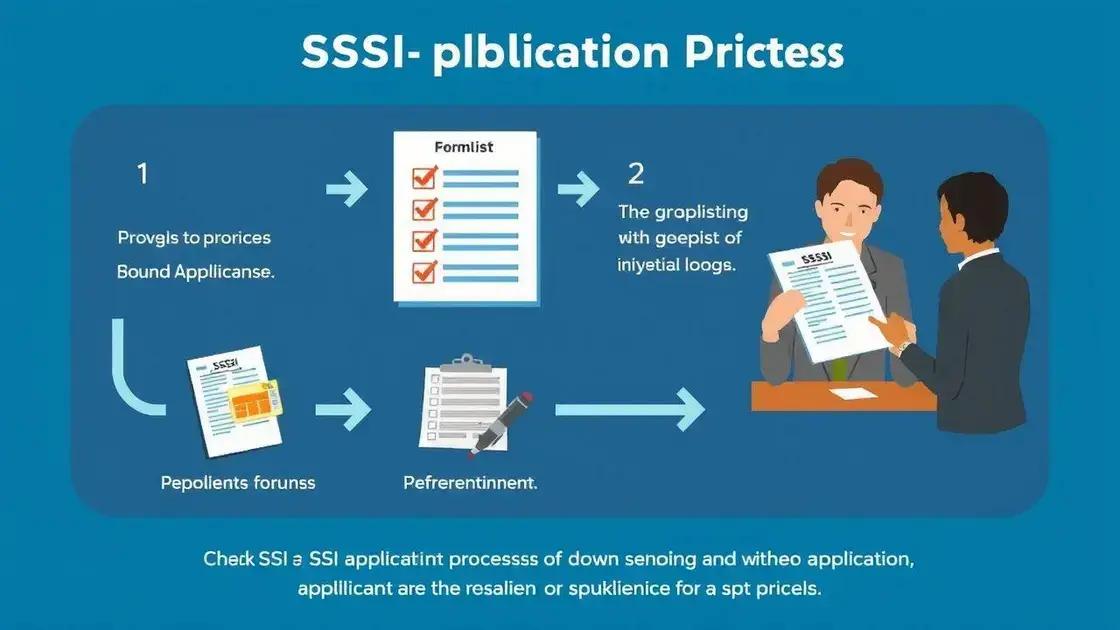
The step-by-step SSI application process can seem complex at first, but breaking it down into manageable parts makes it easier. The process involves gathering necessary information, completing forms, and understanding what to expect.
Gather necessary information
Before starting the application, it’s vital to collect all required documents and information. This preparation ensures a smoother process and avoids delays. You must have details like Social Security numbers, proof of income, and any relevant medical records.
- Social Security numbers for yourself and any family members.
- Proof of any income sources like salaries or pensions.
- Medical records that support your disability claim.
Having these documents ready can streamline the application and reduce back-and-forth communication later on.
Complete the SSI application form
Once you have all the necessary information, the next step is to fill out the SSI application form. You can do this online, by phone, or in person at your local Social Security office. Make sure to provide accurate information in each section to prevent processing delays.
- Double-check all entries before submitting the form.
- Consider using resources to help explain any sections you find confusing.
- Be honest about your income and resources to avoid penalties later.
After submitting the form, you will receive confirmation and further instructions regarding your application status. This part of the process can take time, so patience is key.
What to expect next
After your application is submitted, several steps will follow. The Social Security Administration (SSA) will review your application and may contact you for more information or clarification. They may also schedule medical evaluations if they require further proof of your disability. It’s important to respond promptly to any requests to keep the process moving.
Remember that the SSI application process can vary depending on individual circumstances. Staying organized and maintaining communication with the SSA will help ensure that your application receives the attention it requires.
Important documents needed for SSI
Gathering the right documents is crucial when applying for SSI. Without the necessary paperwork, your application may face delays or even denials. Understanding which documents you need can help streamline the process.
Proof of identity
The first important document required is proof of identity. This helps verify who you are and establishes your eligibility. Acceptable forms of identification include:
- A government-issued photo ID, such as a driver’s license or passport.
- A birth certificate or other official documents showing your name.
- Social Security card or any official mail from the Social Security Administration.
Having these documents ready can make the application process much smoother.
Financial information
You will also need to provide proof of your income and resources. This information helps the Social Security Administration assess your financial situation. Documents that you may need include:
- Recent pay stubs or proof of earnings.
- Bank statements for all financial accounts.
- Proof of any other income sources, such as pensions or disability payments.
Ensure your documents are up-to-date and clearly show your current financial status. This inclusion guarantees that your application reflects accurate information.
Medical records
If you are applying due to disability, medical records are vital to supporting your claim. These records should come from your healthcare providers and might include:
- Detailed medical reports outlining your condition.
- Any test results relevant to your disability claim.
- Documentation from your doctors regarding treatment plans and limitations.
Collecting these documents will help substantiate your application for SSI benefits. Each piece of information plays an integral role in demonstrating your need for assistance.
Common mistakes to avoid in your SSI application
When applying for SSI, avoiding common mistakes can significantly impact your chances of approval. Understanding what these pitfalls are is crucial for a successful application.
Incomplete applications
One frequent error is submitting an incomplete application. It’s important to fill out every section thoroughly. Omitting details can result in delays or denials. Always double-check that:
- All questions are answered.
- Required documents are included.
- Your contact information is current and accurate.
Taking the time to review your application before submission can save you from these setbacks.
Misreporting income and resources
Another common mistake involves misreporting income and resources. Being honest about your finances is essential. Any discrepancies may cause problems or even legal consequences. Make sure that:
- You report all sources of income accurately.
- You understand what counts as resources and declare them properly.
- You avoid exaggerating living expenses to conceal income.
Transparency in financial reporting can lead to a smoother process.
Ignoring follow-up requests
Once you’ve submitted your application, you must stay engaged. Ignoring follow-up requests from the Social Security Administration is a mistake many make. After submission, the SSA might reach out for additional information. If they contact you:
- Respond promptly to any requests.
- Keep copies of all correspondence.
- Stay informed about your application status.
These steps can help keep your application on track. Remaining attentive can prevent unnecessary delays in your application process.
By avoiding these common mistakes, you can enhance your chances of getting the SSI benefits you deserve. Staying organized and proactive will greatly assist you during the application process.
In conclusion, applying for SSI can be a straightforward process if you understand the requirements and common pitfalls. Gathering the necessary documents, reporting your income accurately, and responding to follow-up requests are key steps to success. By avoiding these mistakes, you can enhance your chances of receiving the benefits you need. Stay organized, informed, and proactive throughout the application process to ensure a smoother experience.
FAQ – Frequently Asked Questions about SSI Applications
What documents do I need to apply for SSI?
You will need proof of identity, financial information, and medical records to support your application.
How can I avoid mistakes on my SSI application?
Ensure your application is complete, report income accurately, and respond promptly to any follow-up requests from the SSA.
What is the first step in the SSI application process?
The first step is gathering all necessary documents and information before filling out the application form.
How long does it take to process an SSI application?
Processing times can vary, but it usually takes several months to receive a decision on your application.