Key moments in presidential debates, such as impactful soundbites and body language, significantly shape public opinion and can alter candidates¿ standings in polls during an election cycle.
Presidential debate key moments can significantly influence the electoral landscape. Have you ever wondered how a single line can sway thousands of votes? Let’s dive into the pivotal events that defined recent debates.
The impact of soundbites on voter perception
Soundbites play a crucial role in shaping voter perception during presidential debates. These short, memorable phrases can resonate with the audience and linger in their minds long after the debate ends. A well-crafted soundbite can elevate a candidate’s message and establish a strong connection with voters.
How Soundbites Influence Perception
Effective soundbites catch the audience’s attention and summarize complex ideas in a digestible manner. They help candidates communicate their key messages quickly, making it easier for voters to remember and share them. This is particularly important in today’s fast-paced media environment.
Memorable Soundbites from Recent Debates
Several moments in recent debates demonstrate the power of soundbites:
- “Make America Great Again” encapsulated a strong vision.
- “I am the change we need” resonated with younger voters.
- “It’s time for a new beginning” offered a fresh perspective.
These phrases not only highlight policy stances but also evoke emotional responses, which can sway undecided voters. Soundbites effectively communicate a sense of urgency or hope, drawing people towards a candidate’s vision.
The Risks of Soundbites
While powerful, soundbites can also misrepresent candidates. If taken out of context, a soundbite might convey a message opposite to the candidate’s original intention. This can lead to backlash, as seen with moments that went viral for the wrong reasons.
Ultimately, while soundbites are a double-edged sword, their impact on voter perception remains significant. They are often the first, and sometimes only, impression voters will have about a candidate. As such, mastering the art of the soundbite is essential for any political campaign.
Memorable gaffes that made headlines
In the world of politics, mistakes can sometimes speak louder than accomplishments. Memorable gaffes make headlines for various reasons, often highlighting a candidate’s human side. These moments can define a campaign, shaping public perception in surprising ways.
Famous Gaffes in Recent Elections
Debates and appearances have seen some unforgettable blunders:
- One candidate mispronounced a key term, sparking nationwide discussion.
- Another’s awkward pause left viewers puzzled and amused.
- A third made a comment that seemed out of touch with everyday voters.
Such moments can lead to viral social media content and late-night talk show jokes, influencing how voters perceive the candidates. Instead of detracting from their campaigns, these incidents often humanize the candidates, making them more relatable.
The Spin of Gaffes
Political teams sometimes use gaffes to their advantage. They may redefine or spin these moments to fit their narrative. For instance, an awkward comment might be reframed as a sign of sincerity or honesty. The ability to manage the fallout from a gaffe can determine a candidate’s resilience during a campaign.
However, not all gaffes can be easily spun. Some can be detrimental, causing lasting damage to a candidate’s reputation. Voters might question their competence or judgment, leading to a decline in support. Recognizing this, candidates often prepare extensively for debates, knowing that every word can be scrutinized.
Despite the potential fallout, memorable gaffes remain a staple of political discourse. They reflect the pressures candidates face and remind voters of their humanity. Watching these moments unfold often adds an element of drama to the election process, keeping the audience engaged as they navigate through candidate personas.
How debates influenced election strategies
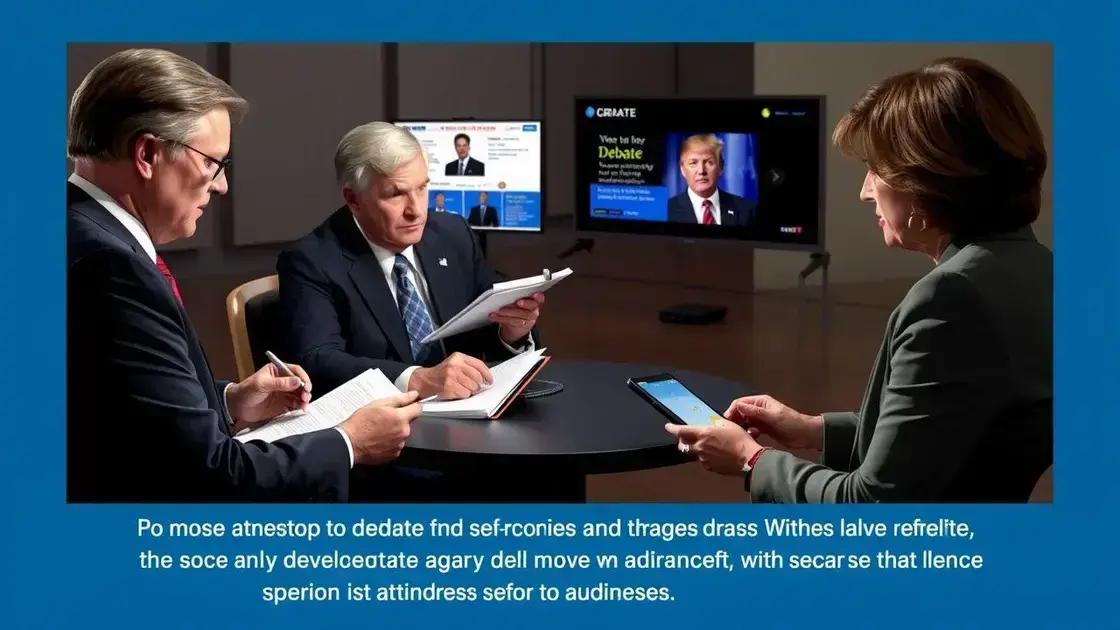
Debates are pivotal in shaping the strategies candidates use in elections. How debates influenced election strategies is a key topic for understanding modern political campaigns. Candidates must adapt their messages and tactics based on what they learn from their opponents and audience reactions during these events.
The Role of Debates in Strategy Development
Before debates, campaigns conduct extensive research. They analyze prior performances, focus on likely challenges, and prepare responses. This preparation can lead to significant shifts in strategy, depending on how candidates expect their opponents to behave.
Adjusting Messaging and Tone
Debates provide a platform to test messaging and tone. Candidates often adjust their strategies based on immediate feedback from the audience, such as laughter or applause. For example:
- Candidates may choose to soften their attacks based on perceived audience reactions.
- Humor can be introduced if it resonates well during the debate.
- Focusing on relatable issues becomes crucial if they see that their message connects with voters.
This adaptability is vital in a campaign where perception matters. Knowing when to pivot can help candidates maintain or gain support during critical moments.
Long-Term Strategic Shifts
The impact of debates often extends beyond immediate reactions. Campaigns evaluate debate performances to refine their long-term strategies. Candidates may identify which messages resonate with voters and which do not. For instance, a candidate’s strong performance on economic issues could lead to more focus on that topic in subsequent messaging. This adjustment ensures they remain relevant and engaging throughout the election cycle.
Furthermore, post-debate analyses can lead to adjustments in overall campaign strategies. Data gathered from viewer polls and responses help shape future advertising, public appearances, and even grassroots outreach efforts. As a result, candidates who successfully leverage their debate performances often find themselves more connected to the electorate.
Key moments that shifted public opinion
Throughout election cycles, certain events have the power to reshape how the public views candidates. Key moments that shifted public opinion often define elections and influence voter decisions significantly. These moments can be dramatic and surprising, making headlines that capture the nation’s attention.
Defining Moments in Debates
Debates can be a breeding ground for pivotal moments. A single comment or action can change everything. For instance:
- One candidate’s strong rebuttal caught on camera aired across all media.
- Another candidate’s emotional response resonated with viewers.
- A significant policy statement shifted conversations and raised expectations.
These moments not only attract media coverage but also create a ripple effect. In the days following such incidents, polls often show a shift in voter sentiment in favor of the candidate who delivered an impactful performance.
The Influence of Unexpected Events
Not all key moments happen on stage. Unexpected events can also sway public opinion. A scandal can quickly alter perceptions. For example, when a candidate faced allegations, it led to:
- Intense media scrutiny that caused voters to rethink their choices.
- A rapid drop in approval ratings as public trust eroded.
- Opponents capitalizing on the situation to present themselves as the better choice.
Such moments highlight the fragile nature of public opinion during elections. Candidates realize that they must remain vigilant and respond quickly to changes in the narrative.
The impact of grassroots movements can also prove to be a key factor. When ordinary citizens come together for a cause, their collective voices can shift opinions. Notable movements lead to:
- Increased awareness of social issues that resonate with the electorate.
- Mobilization of voters who might otherwise remain apathetic.
- Changes in party platforms to align with the growing concerns of the public.
Collectively, these moments paint a picture of evolving public sentiment, shown through polling data and cross-platform discussions. The ability to seize these moments and turn them into advantages is crucial for candidates looking to win.
Analysis of body language in debates
Body language plays a critical role in political debates, often conveying more than words alone. Analysis of body language in debates can reveal how candidates perceive themselves and their opponents, making it a vital aspect of political communication.
Understanding Body Language Cues
Candidates use various body language cues to communicate confidence, openness, or aggression. For example:
- Maintaining eye contact can signal confidence and engagement.
- Crossed arms may indicate defensiveness or resistance.
- Gestures can emphasize points and showcase passion.
These signals can influence viewer perception significantly, often determining who seems more trustworthy or likable. Candidates must be aware that their physical presence can amplify their verbal messages.
The Role of Non-Verbal Communication
Non-verbal communication often reveals a candidate’s true feelings about issues and opponents. For instance, a candidate might smile while delivering a critical comment, which can create confusion among voters. This juxtaposition can lead to mixed signals that confuse or engage the audience. Additionally, physical posture can reflect the mental state of the candidates. An open posture invites connection, while a slouched position may suggest disinterest or defeat.
Furthermore, reactions to opponents’ statements can provide insight into a candidate’s strategy. Small gestures, such as head nods or sighs, can indicate approval or disapproval without saying a word. Viewers often pick up on these cues subconsciously, shaping their opinions.
Candidates also observe their opponents’ body language for clues about confidence and strategy. Reacting to these cues can dictate how well they maintain composure during heated moments. Understanding how to read body language is crucial for effective communication in debates.
Ultimately, the ability to manage and interpret body language can make or break a candidate’s performance during a debate. Successful candidates adapt their body language to match their message, ensuring they resonate with voters effectively.
FAQ – Key Moments in Presidential Debates
What role do debates play in shaping public opinion?
Debates provide a platform for candidates to present their views and respond to opponents, significantly influencing how voters perceive them.
How do soundbites affect voter perceptions?
Soundbites are memorable phrases that can resonate with voters, often summarizing a candidate’s message in a way that sticks in the minds of the electorate.
Why is body language important in debates?
Body language reveals a candidate’s confidence and authenticity, affecting how viewers connect with them beyond their spoken words.
What are some examples of moments that shifted public opinion?
Examples include a strong debate performance that gains traction in polls or a gaffe that leads to a decline in a candidate’s approval ratings.
